
Merging Two Enablement Platforms
Doesn't Create Revenue Activation.
From 'Revenue Effectiveness Platform' to Activation Engine.
From Consolidation to Causation.
The Real Cost Isn't the Merger Premium.
It's the Gap Between 'Effectiveness' and 'Activation.'
- Content gets organized
- Training modules get completed
- AI features get enabled
- Reps still spend 70% of time on non-selling work
- Revenue impact still can't be proven with deal-level causation
Your Capacity Gap (Example)
Agentic Field Support' That Still Requires Reps to Visit the Platform
Isn't Agentic.
Showpad has gone big on AI with the Bigtincan merger. Even Showpad Assist, their 'field sales agent', is designed around a workflow where reps open the app, capture notes, wait for AI to summarize, review briefings, then execute in their actual selling environment. That's a better capture-and-summarize loop. It's not activation.
Showpad's Approach
- Showpad Assist captures and summarizes
- GenieAI provides roleplay before deals
- 'Field-first intelligence' = mobile app focus
- AI improves what's in the platform
- Reps must initiate AI interaction
Activation Approach
- System detects and injects, no capture needed
- Signal arrives during deals
- Workflow-first = embedded in CRM, email, calendar
- AI eliminates the need for the platform
- System initiates based on deal context
Showpad built a smarter assistant for field reps who can stop and capture. GTM Buddy activates execution for reps moving at conversation speed.
Two Leaders in the Same Legacy Category
Is Still the Same Legacy Category.
In November 2025, Showpad announced they were named a Leader in the 2025 Gartner Magic Quadrant for Revenue Enablement Platforms, with both Showpad and Bigtincan individually recognized as Leaders. Their messaging: "Dual Leader recognition marks a new era."
- Platform completeness
- Feature breadth
- Market presence
- Vision for enablement
- 'Can they execute as a vendor?'
- Execution support in workflow
- Signal injection at moment of need
- Capacity unlocked per rep
- Causal proof of revenue impact
- 'Can they help YOUR reps execute in deals?'
The Reframe:
Showpad can be a Leader in the old category forever. The question is whether your revenue constraint lives in that category - or in the one that hasn't been named yet.
Analyst validation ≠ Revenue causation.
Category leadership ≠ Architectural transformation.
Five Readiness Levers. One Activation System.
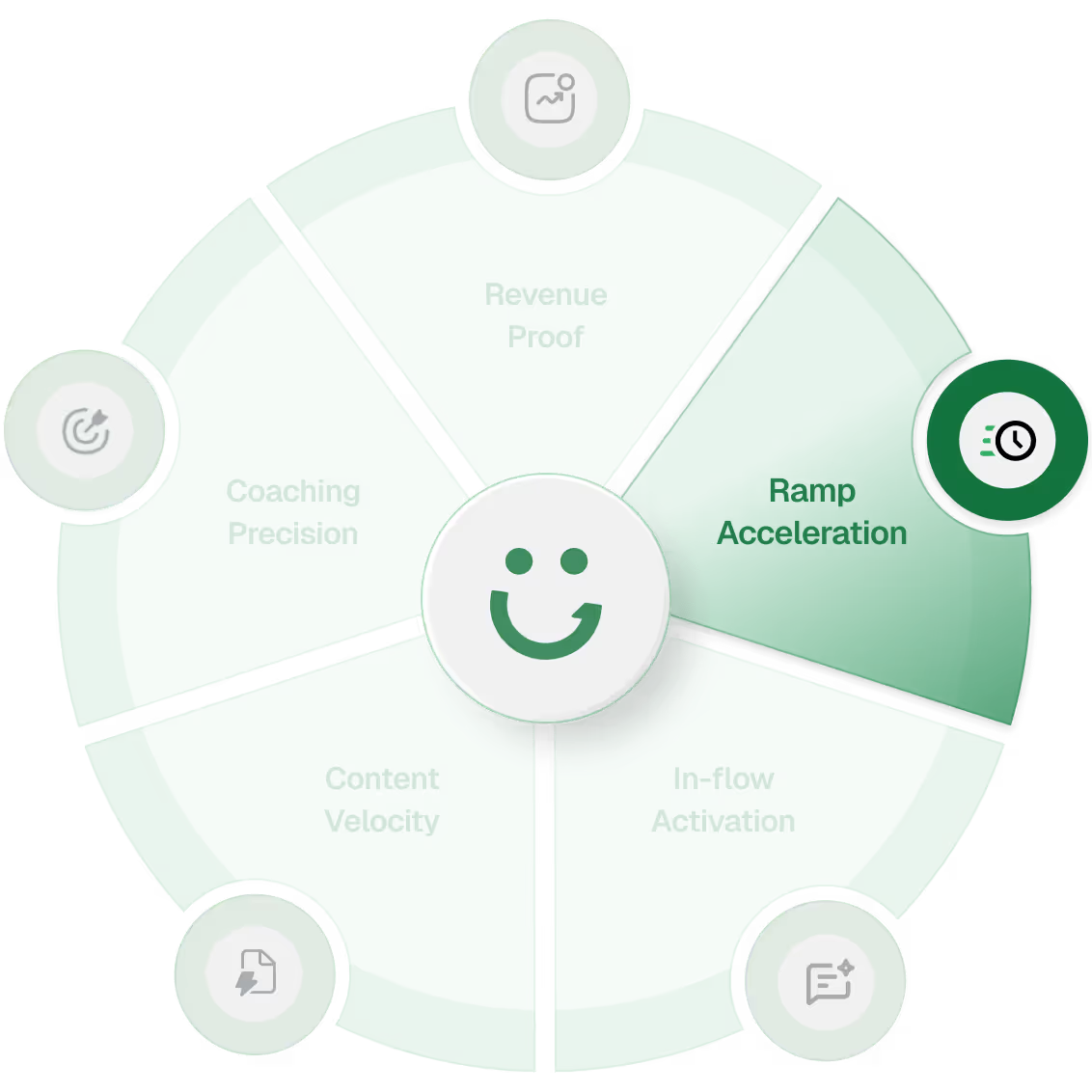
Ramp Acceleration
Be Ready This Quarter, Not the Next One
Showpad Approach
GenieAI roleplay + Bigtincan readiness, PitchAI practice sessions
Activation Approach
Learning reinforced in live workflow, signal during actual deals
Outcome: Faster ramp. More quota-hitters this quarter.
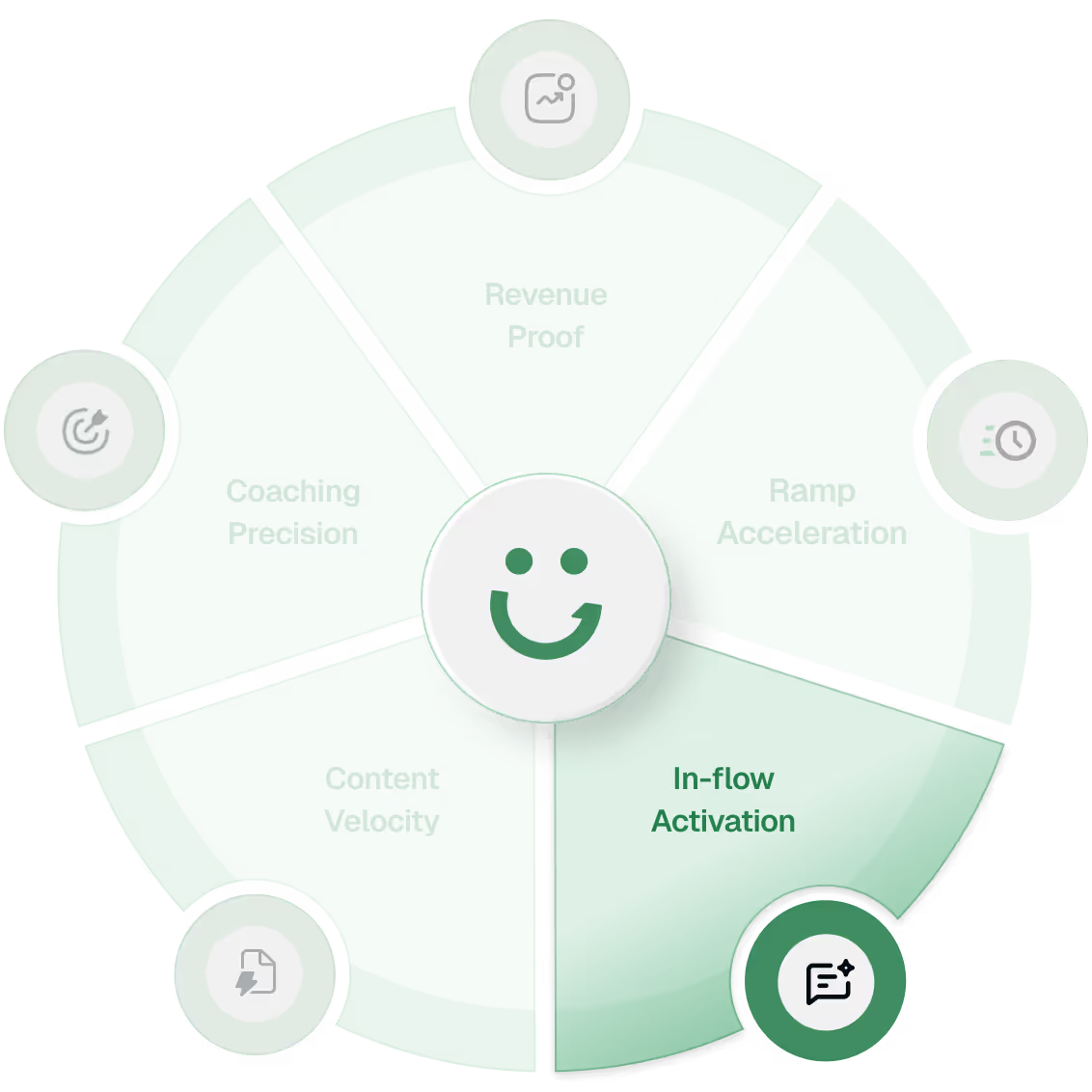
In-Flow Activation
Built Around the Rep, Not the Platform
Showpad Approach
Showpad Assist mobile app, 'Field-first' = open the app
Activation Approach
Workflow-first = never leave the deal. AI activates before you ask.
Outcome: Focused reps. Faster deals. No platform dependency.
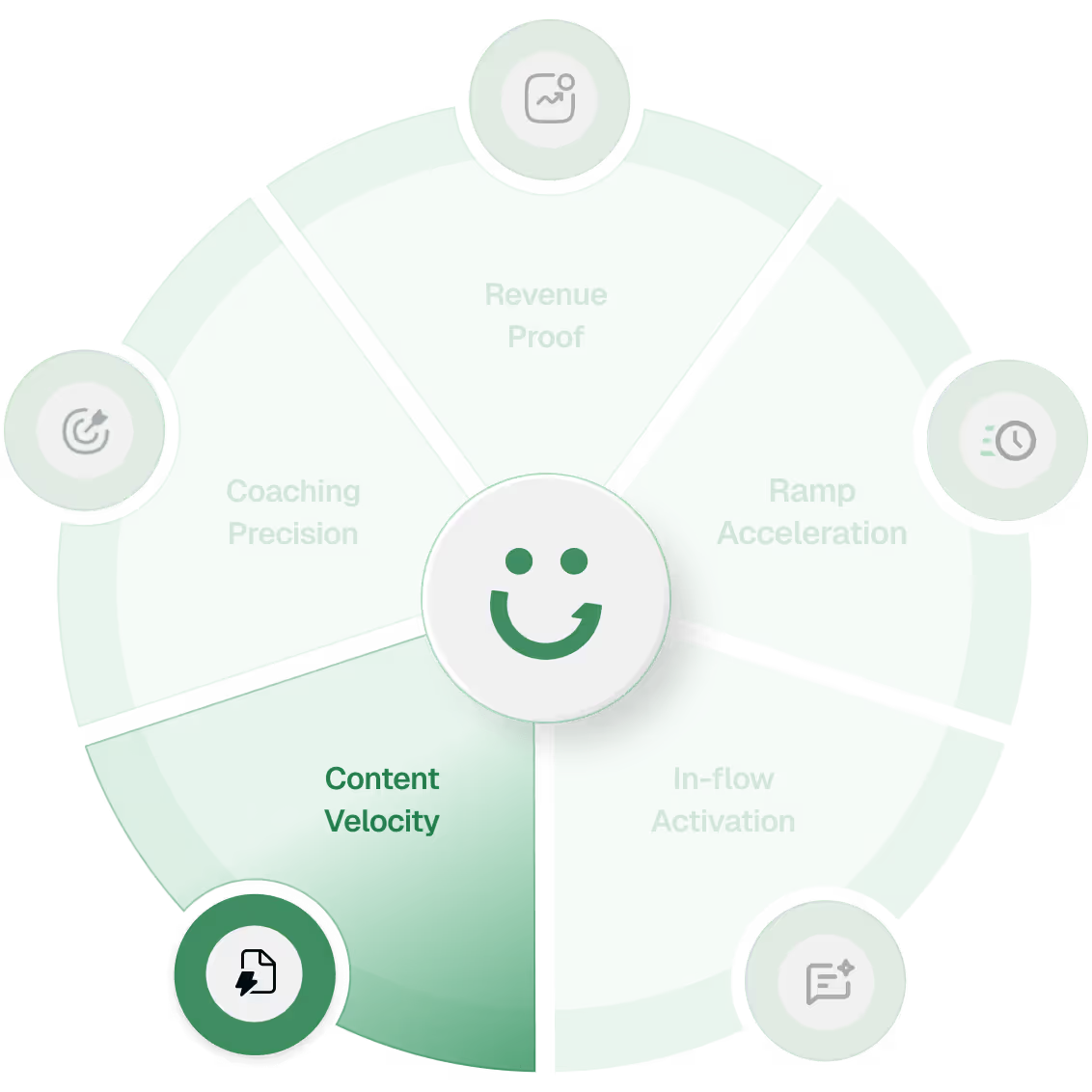
Content Velocity
Confidence, Not Volume
Showpad Approach
Content organized in the platform, AI-powered search improvements
Activation Approach
Right content at right moment. No search required.
Outcome: The right asset for this buyer, this moment, without hunting.
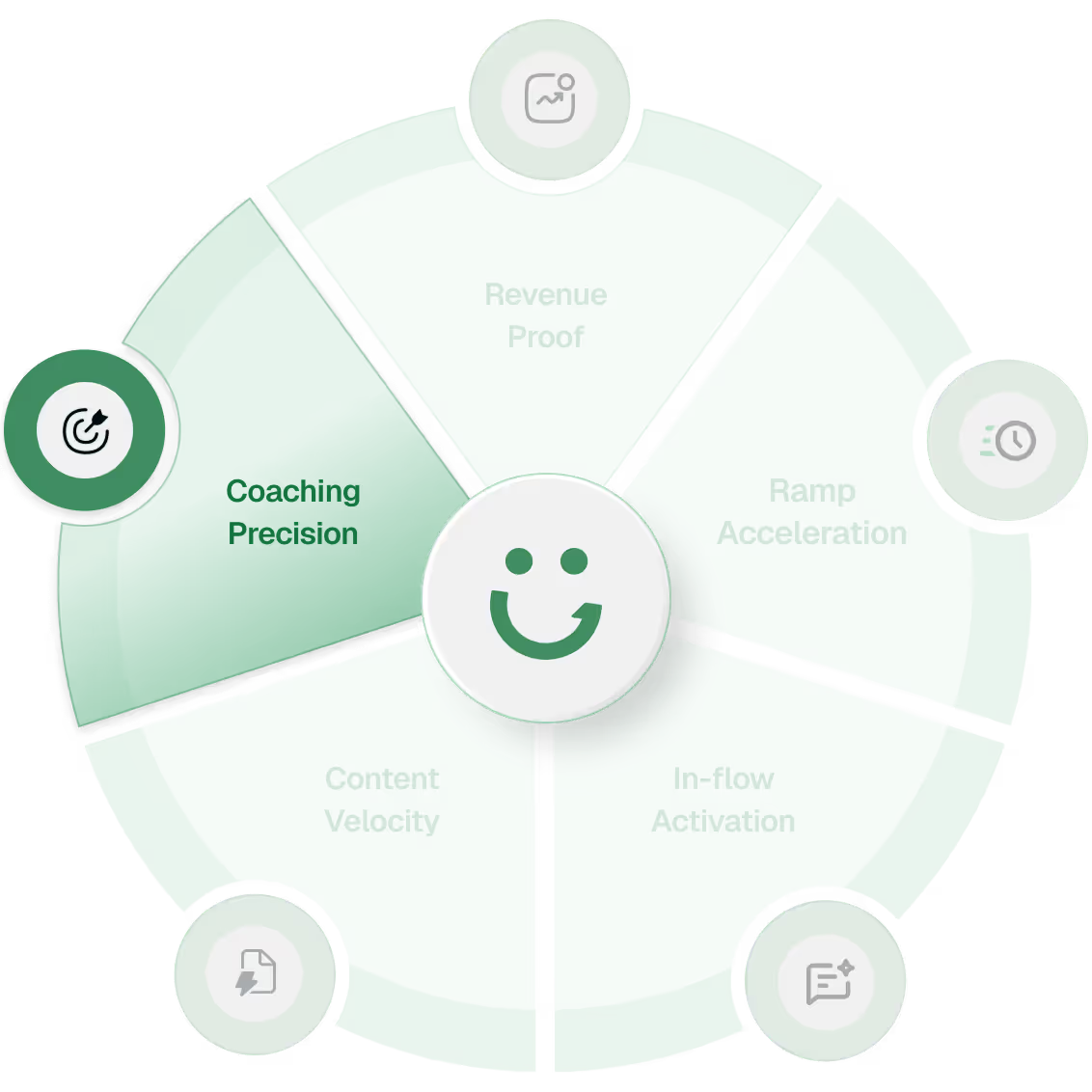
Coaching Precision
The One Thing That Moves This Deal
Showpad Approach
PitchAI practice + benchmarking, GenieAI digital avatars
Activation Approach
One focused adjustment. Real-time intervention during execution.
Outcome: Better forecast accuracy. Managers as pit crew chiefs, not roleplay reviewers.
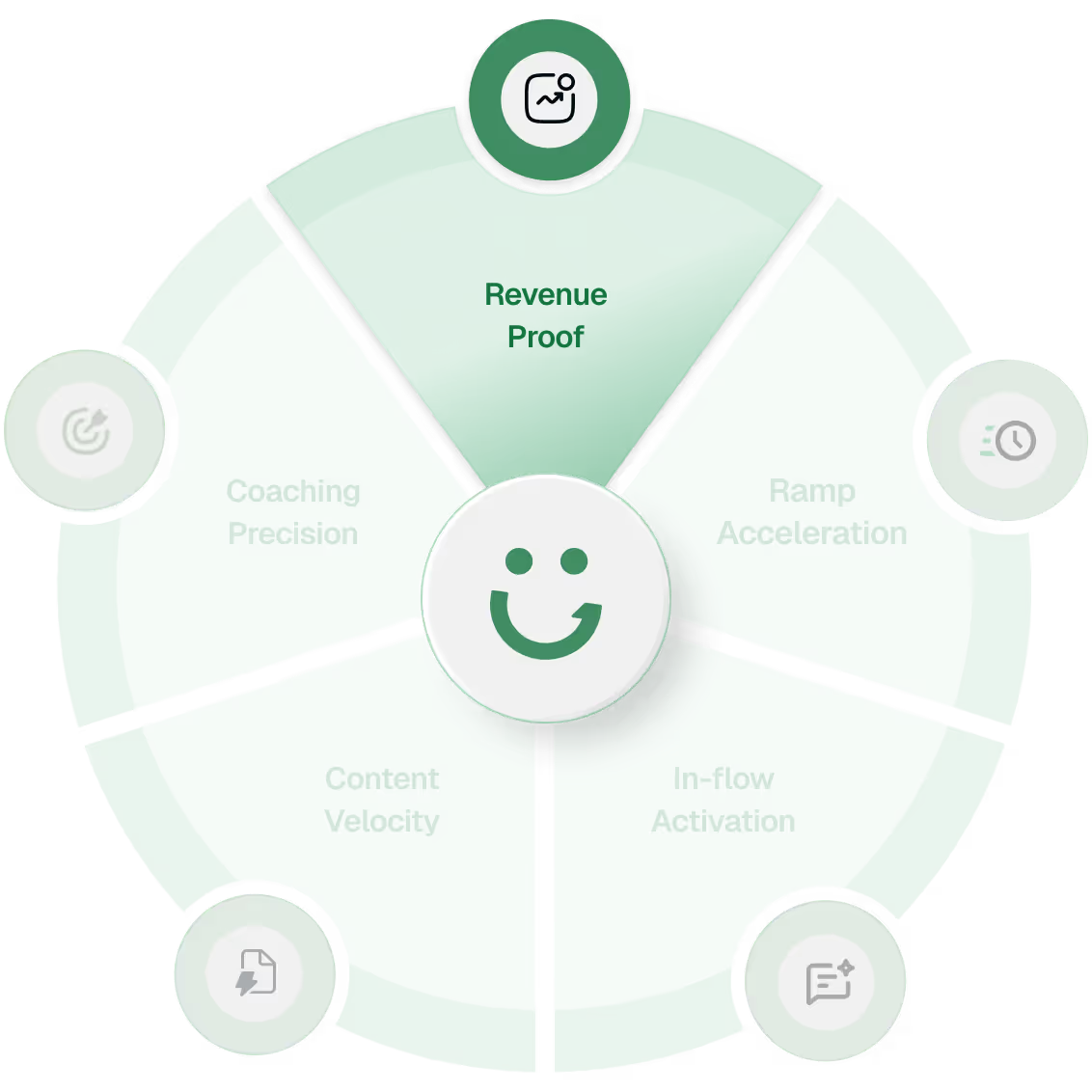
Revenue Proof
From Correlation to Causation
Showpad Approach
'70% more likely to hit quota with AI' (survey), AnalyticsIQ dashboards
Activation Approach
'This action moved this deal' (attribution). Deal-level revenue proof.
Outcome: Defensible ROI. Strategic credibility without surveys.
Escaping Platform Consolidation Is Simpler Than You Think.
Migration Timeline
What Makes It Fast
No Change Management Overhead - while Showpad customers navigate the Bigtincan integration, you could be activating
You're Not Underpowered. You're Under-Activated.
Frequently Asked Questions
We've invested heavily in Showpad. Is migration worth the disruption?
The revenue potential already present inside your existing team, buried under execution friction that a storage architecture cannot remove.
The real question isn't whether migration is disruptive. It's whether staying is more expensive. If your reps are still leaving their workflow to find content, still receiving coaching after deals are lost, and your enablement team still can't draw a causal line from activation inputs to revenue outcomes - Showpad is costing you Revenue Capacity every quarter you stay.
GTM Buddy runs on top of your existing stack: Salesforce, Slack or Teams, Google Drive or SharePoint. Your content library migrates with tagging intact. Most teams reach full activation across all Five Levers within 12 weeks. The disruption is real. The cost of not activating Revenue Capacity is larger.
Showpad just merged with Bigtincan and added tons of AI features. Aren't we losing capabilities?
You're not losing capabilities. You're trading capabilities built for Storage Architecture for activation built for Context Architecture.
The Showpad-Bigtincan merger added more content management, broader search, and AI-assisted retrieval. All of it assumes the problem is rep access to assets. It isn't. The problem is execution friction inside live deals. More AI layered onto a Storage Architecture doesn't change the architecture. Reps still context-switch to find content. Coaching still arrives after the moment. Activity data still can't be tied to revenue outcomes.
Revenue Activation doesn't add a better retrieval layer. It detects deal signals and injects the right guidance, content, and next-best-action inside the workflow where the rep already is. That's a structural difference - not a feature gap you're trading.
Showpad Assist is their 'first-ever field sales agent.' Doesn't that solve the activation problem?
An agent that requires reps to visit a platform is still a platform. That's not In-Flow Activation - it's a smarter search bar inside a Storage Architecture.
In-Flow Activation means the right guidance surfaces inside Salesforce, Slack, or the email thread the rep is already working in - without a context switch. Showpad Assist operates inside the Showpad interface, which means the rep must stop, navigate, query, interpret, and return. Every step is execution friction. GTM Buddy's Nucleus detects deal signals and delivers activation in the rep's workflow without requiring them to leave it. The difference isn't AI sophistication. The difference is architecture: Storage Architecture retrieves. Context Architecture activates.
They're a 'dual Leader' in Gartner now. Doesn't that validate the merger?
Gartner measures category incumbency within the Sales Enablement and Digital Sales Room categories. Neither category is Revenue Activation.
What the dual-leader recognition confirms is that Showpad-Bigtincan is the most complete version of a model built before the Agentic Era of Sales existed - a model where reps search for assets, train on a schedule, and receive coaching after the deal has already been decided. Those criteria don't measure whether rep execution changed inside a live deal. Revenue Activation isn't a Gartner category yet.
That's the point. The organizations building on it aren't waiting for the quadrant to catch up. By the time it appears, the architecture question will already be decided.
How long does migration actually take?
Most teams are fully activated on GTM Buddy within 8 to 12 weeks.
Weeks 1-4 cover integration with your CRM, Slack or Teams, and existing content library - no manual re-tagging required. Weeks 4-8 cover workflow configuration, rep onboarding, and activation setup across all Five Levers: Ramp Acceleration, In-Flow Activation, Content Velocity, Coaching Precision, and Revenue Proof. By week 12, in-flow guidance is running live, new-hire ramp is underway, and you have an early Revenue Proof baseline to take to your CRO.
GTM Buddy runs on top of your existing stack, not instead of it. Salesforce, Slack or Teams, Google Drive or SharePoint - none of that changes. What changes is that Revenue Activation is now happening inside those systems instead of requiring reps to leave them.
Book a demo →
How do you measure ROI differently than Showpad?
Showpad measures activity: content views, training completions, buyer engagement scores. Those metrics confirm that enablement happened. They don't confirm that revenue behavior changed.
GTM Buddy's Revenue Proof lever ties activation inputs to revenue outputs - rep by rep, deal by deal. That means a Revenue Activator can walk into a CRO budget conversation and answer the question that actually matters: which reps improved their execution after receiving activation, and what did that produce in quota attainment, ACV and deal velocity? That's a causal story, not a correlational one. It's what separates enablement defended as a revenue system from enablement cut as a support cost.
What does 'Revenue Capacity' actually mean?
Revenue Capacity Definition: The revenue potential already present inside your existing team - not from adding headcount, but from removing the execution friction that keeps each rep from performing at their ceiling.
Most B2B sales orgs don't have a headcount problem. They have a capacity utilization problem. Reps spend the majority of their time on work around the conversation - searching for content, reconstructing context, waiting on coaching that arrives after the deal is decided. That lost time isn't just inefficient. It's unmeasured revenue sitting inside the team.
Revenue Activation unlocks Revenue Capacity per Rep across five dimensions: Ramp Acceleration gets new hires producing this quarter, not next. In-Flow Activation delivers the right guidance at the exact moment a selling decision is made. Content Velocity puts the right asset in the right deal stage without a manual search. Coaching Precision intervenes early enough to change the outcome. Revenue Proof makes the causal link between activation and revenue visible, rep by rep and deal by deal. The output is more revenue from the team you already have - without adding headcount.