
The Enablement Cloud Was Never the Problem.
The Architecture Was.
GTM Buddy activates the capacity that content never could.
From Enablement Cloud to Activation Engine.
From Complexity to Clarity.
The Real Cost Isn't the $100K+ Contract.
It's the 17 Months to ROI.
- 4-6 month implementations
- Dedicated admin requirements
- Ongoing professional services
- Training programs just to use the training platform
Your Capacity Gap (Example)
Adding AI Agents to an Enablement Cloud
Is Like Adding a Copilot to a Library.
Seismic has gone all-in on 'Agentic AI' with their Aura suite. Their messaging: 'Agentic AI isn't a feature you add, it's an architecture you build from.' The irony? They're adding these agents to a platform architecture that still requires portal access.
Seismic's Approach
- Agents live in the platform
- Rep asks the agent for help
- Role-play before the deal
- AI helps you find content faster
- 'Interoperable' (integrations)
Activation Approach
- Activation lives in the workflow
- System detects need and injects
- Signal during the deal
- AI eliminates the need to find
- Embedded (native)
Seismic is building smarter assistants for their library.
GTM Buddy eliminates the need for the library.

Bizzabo didn't switch because Highspot was 'bad.' They switched because they hit the ceiling of what storage architecture can deliver. When enablement lives in a portal, adoption is a constant fight. When activation lives in the workflow, adoption is automatic.
Five Readiness Levers.
One Activation System.
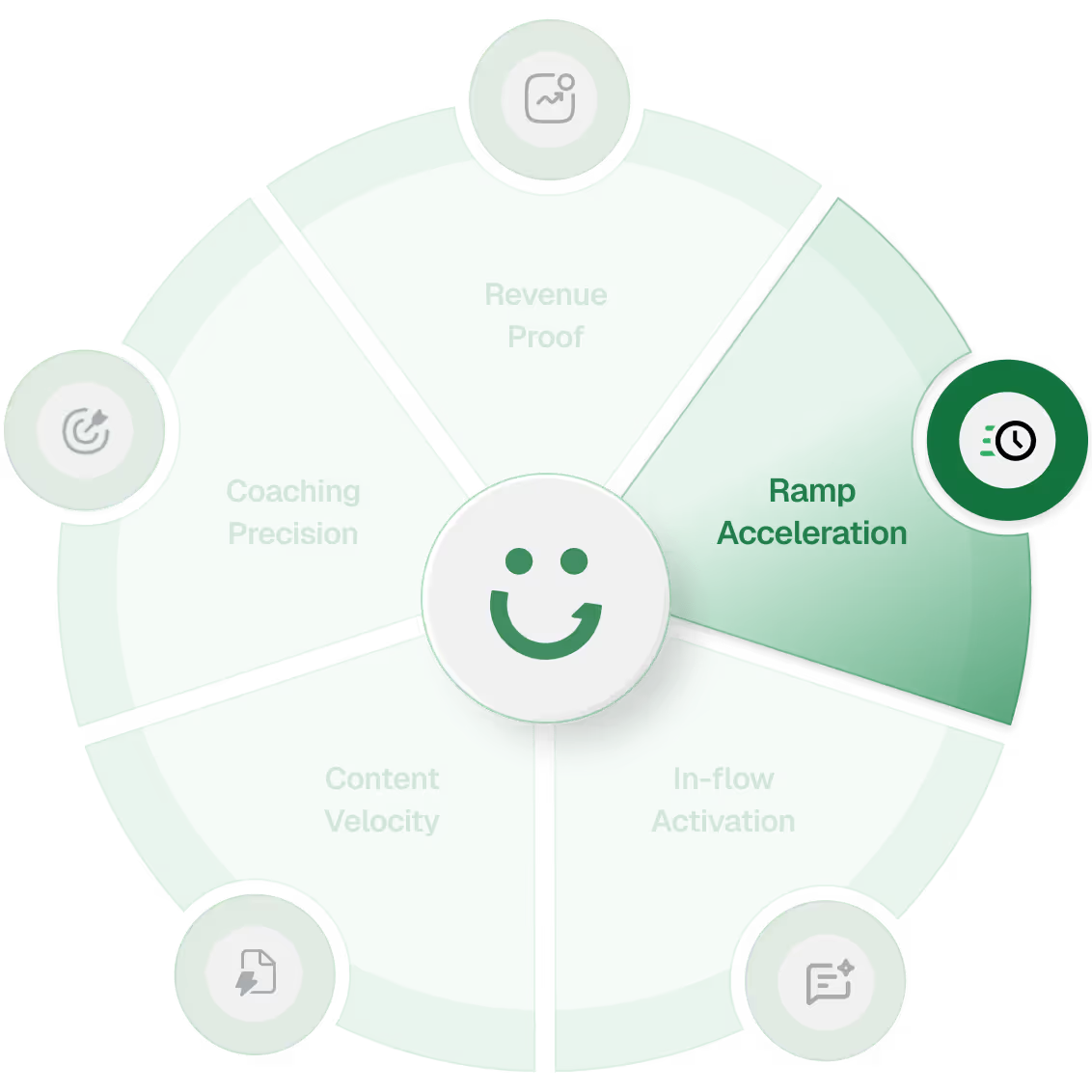
Ramp Acceleration
Be Ready This Quarter, Not the Next One
Legacy Approach
Seismic Learning (LMS) + certifications, AI Role-Play practice before deals
Activation Approach
Learning reinforced in live workflow, AI signal injection during deals
Outcome: Faster ramp. More quota-hitters this quarter.
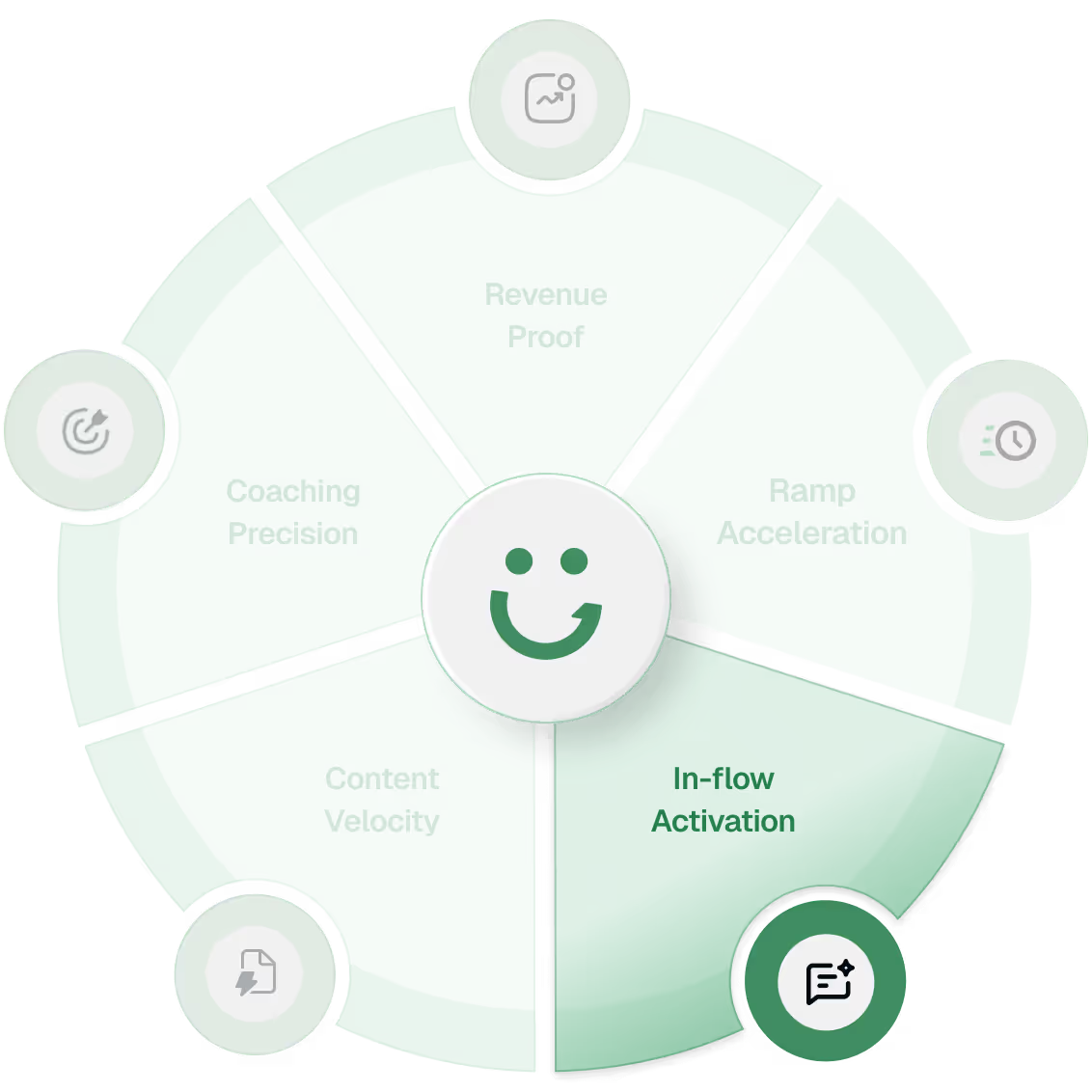
In-Flow Activation
Built Around the Rep, Not the Platform
Legacy Approach
'Log into the Enablement Cloud', Ask Aura Chat for help
Activation Approach
Shows up in CRM, email, calendar. System injects without asking.
Outcome: Focused reps. Faster deals. No platform dependency.
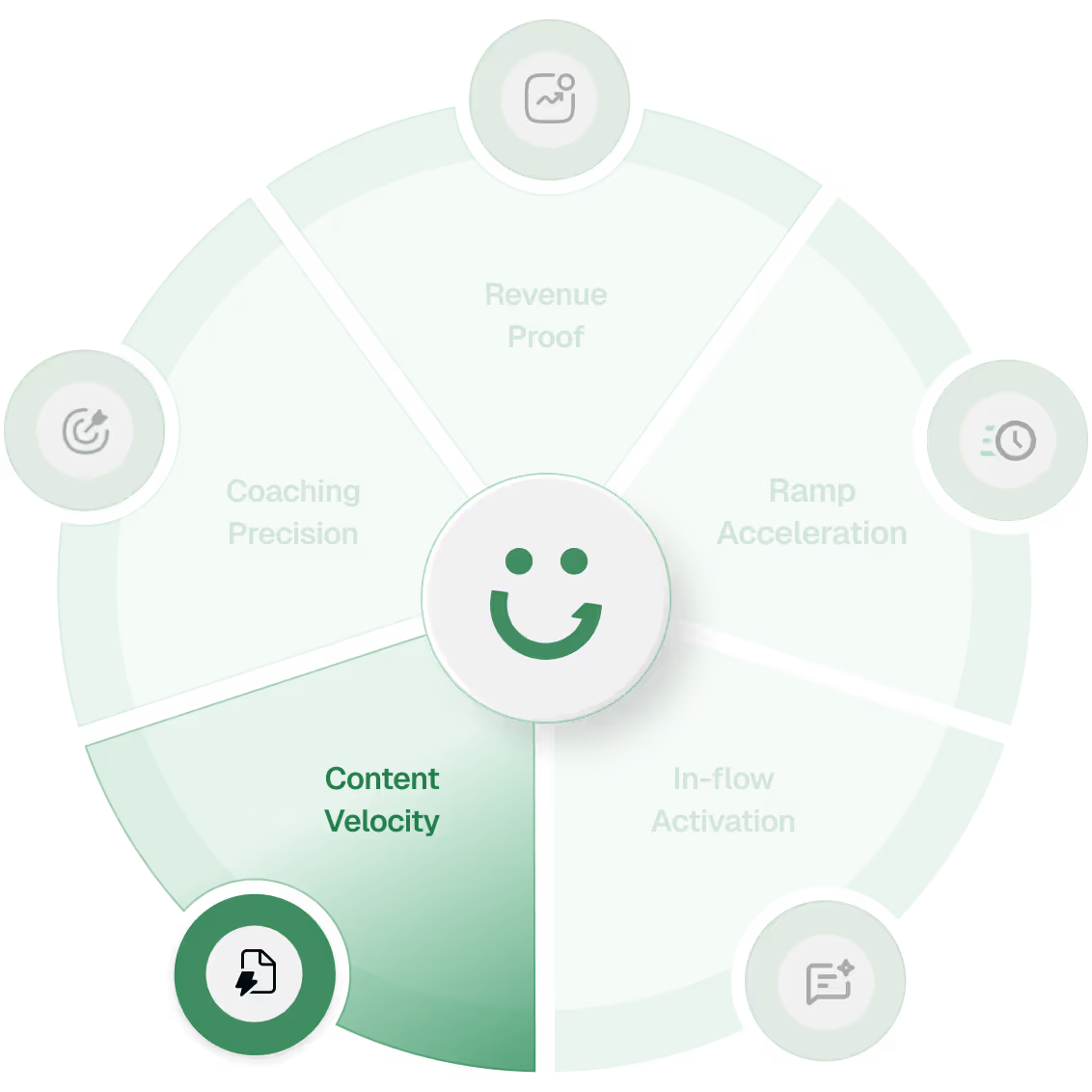
Content Velocity
Confidence, Not Volume
Legacy Approach
Comprehensive content library, AI-generated content at scale
Activation Approach
Right content at right moment, context-matched content in flow
Outcome: The right asset for this buyer, this moment.
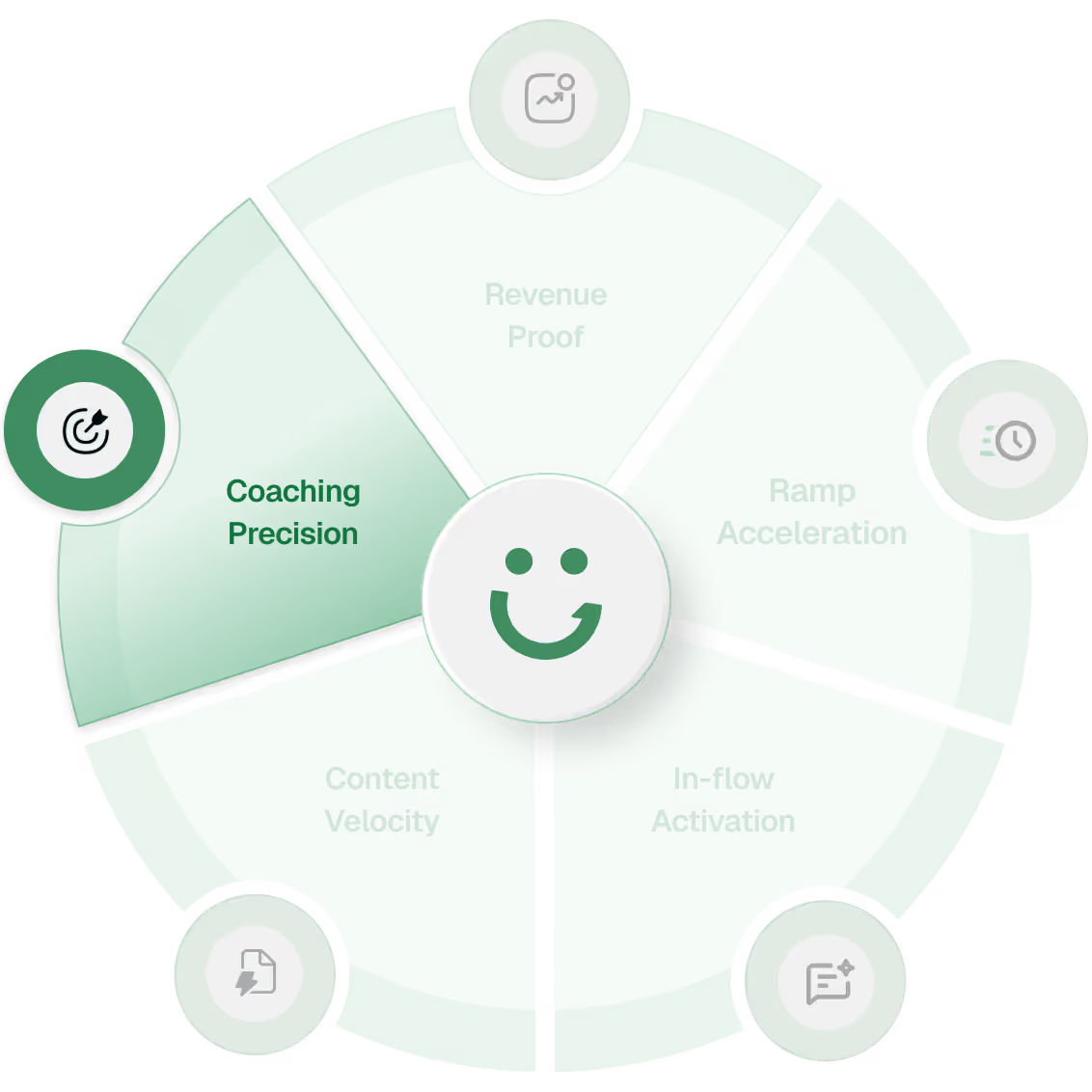
Coaching Precision
The One Thing That Moves This Deal
Legacy Approach
Conversation intelligence (post-call), analytics dashboards
Activation Approach
Real-time intervention, single focused cue
Outcome: Better forecast accuracy. Managers as pit crew chiefs.
Revenue Proof
From Correlation to Causation
Legacy Approach
'92% say AI improves productivity' (surveys)
Activation Approach
'This action moved this deal' (attribution)
Outcome: Defensible ROI. Strategic credibility with the CRO.
Escaping the Constraint Is Simpler Than You Think.
Migration Timeline
What Makes It Fast
You're Not Underpowered. You're Under-Activated.
Frequently Asked Questions
We've invested heavily in Seismic. Is migration worth the disruption?
The question isn't whether Seismic is working. It's whether it's activating revenue. If your reps are still spending 70% of time on non-selling work, if you still can't prove enablement's revenue impact, the architecture not the investment is the constraint. Migration isn't disruption; it's escape.
Seismic has way more features. Aren't we losing capabilities?
You're losing complexity, not capability. Seismic's feature breadth optimizes for content management at scale. GTM Buddy optimizes for revenue activation. The question isn't 'which has more features?' It's 'which unlocks more capacity?'
Seismic just launched Aura AI Agents. Doesn't that solve the activation problem?
Aura agents assist reps inside the Enablement Cloud. Reps still need to access the platform, ask for help, and execute elsewhere. That's assisted retrieval, not activation. True activation means signal injection at the moment of execution without the rep asking, without leaving the workflow.
Our team has spent months learning Seismic. Won't there be a new learning curve?
GTM Buddy lives inside tools reps already use (CRM, email, calendar). There's no new platform to learn. The 'learning curve' is effectively zero because there's no portal to adopt.
How long does migration actually take?
Most teams go live in weeks. AI-powered content mapping eliminates manual hierarchy recreation. And because there's no Enablement Cloud to teach, adoption is immediate. Compare that to Seismic's typical 4-6 month implementation.
How do you measure ROI differently than Seismic?
Seismic measures engagement: content views, completion rates, platform adoption. GTM Buddy measures causation: which enablement actions directly moved which deals. The shift from '92% say AI improves productivity' to 'this action increased win rate by 12%' is the difference between surveys and proof.
What does 'Revenue Capacity' actually mean?
Revenue Capacity is the maximum amount of pipeline a rep can carry, progress, and close without judgment breakdown or cognitive overload. It's not a productivity metric; it's an economic constraint. Seismic manages content. GTM Buddy activates capacity.