
'AI-Native' Enablement Is Still Enablement.
Revenue Activation Is Something Different.
From 'AI-Native Unified Enablement' to Activation Engine.
From Platform Intelligence to Workflow Activation.
The Real Cost Isn't the Series A Valuation.
It's the Gap Between 'AI Superpowers' and
Revenue Causation.
- Content gets AI-generated and organized
- Roleplay practice happens in the platform
- AI Sales Rooms get created and shared
- Reps still spend 70% of time on non-selling work
- Revenue impact still can't be proven at the deal level
Your Capacity Gap (Example)
Adding AI Agents to Storage Architecture
Is Still a Platform You Have to Visit.
Letter.AI has impressive AI capabilities: Letter AI Agent, AI Roleplay, AI Content Generation, AI Sales Rooms, and AI RFP Automation. Their messaging: 'Give your team AI superpowers.' But even a brilliant AI agent, when it lives inside a platform, requires reps to open Letter.AI, navigate to the relevant module, ask the AI for help, wait for recommendations, then execute in their actual selling environment.
Their current AI capabilities include:
Letter.AI's Approach
- AI agent lives in the platform
- Rep asks the AI for help
- Practice before the deal (roleplay)
- AI helps you find/create content faster
- 'Unified' (all in one platform)
Activation Approach
- Activation lives in the workflow
- System detects need and injects
- Signal during the deal
- AI eliminates the need to find
- Embedded (native to rep's tools)
Letter.AI built smarter tools for enablement.
GTM Buddy eliminates the gap between enablement and execution.
21 G2 Badges and Momentum Leader Status
Validate Platform Excellence, Not Revenue Causation.
User satisfaction with the platform
Feature completeness
Market momentum and growth
Implementation experience
Whether platform usage causes deals to close
Whether reps can execute without visiting the platform
Whether 'unified enablement' translates to revenue capacity
Whether the enablement category itself is the right frame
Funding momentum ≠ Architectural transformation.
Five Readiness Levers. One Activation System.
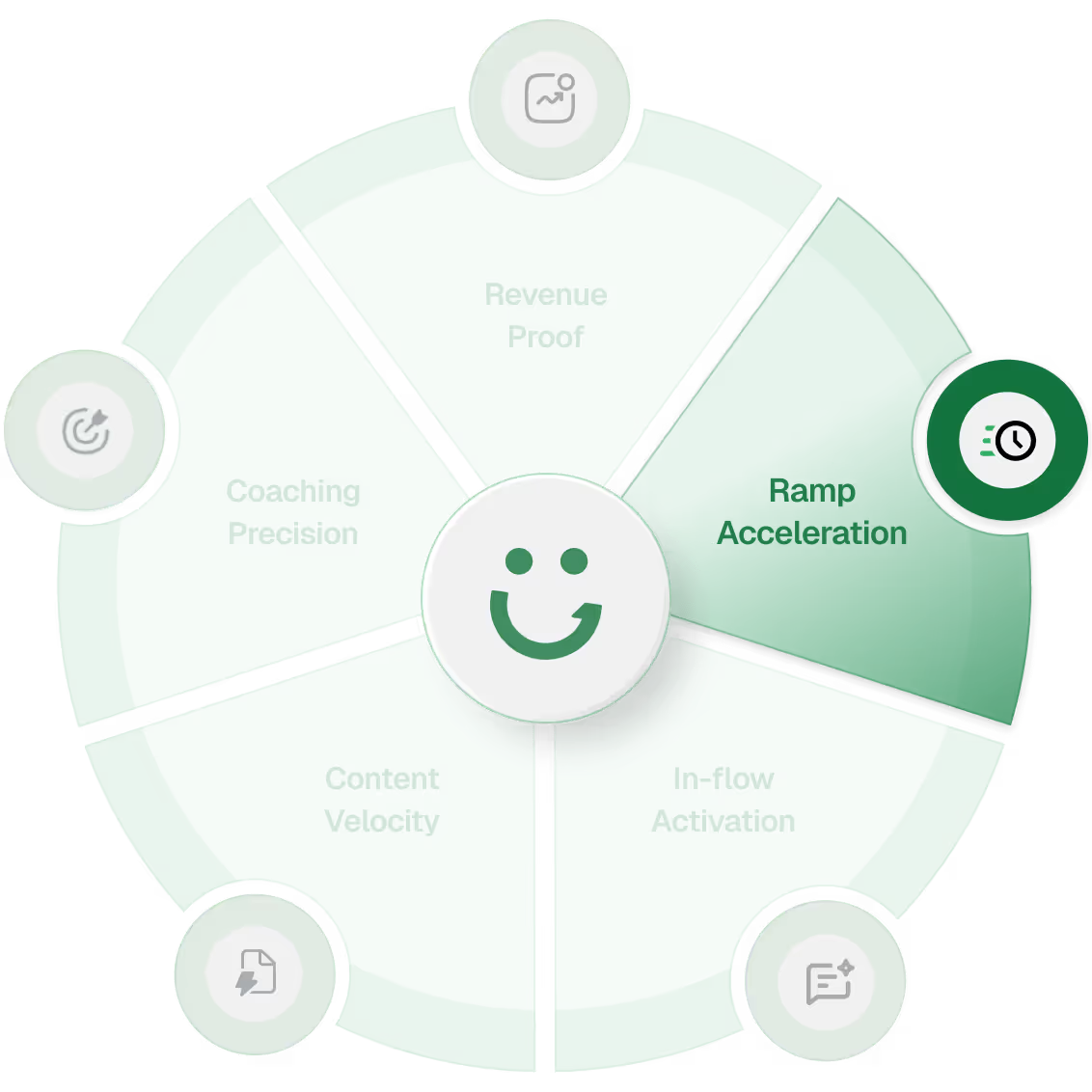
Ramp Acceleration
Be Ready This Quarter, Not the Next One
Letter.AI Approach
AI roleplay practice in platform, Track completion and practice scores
Activation Approach
Learning reinforced in live workflow, Track time-to-first-deal
Outcome: Faster ramp. More quota-hitters this quarter.
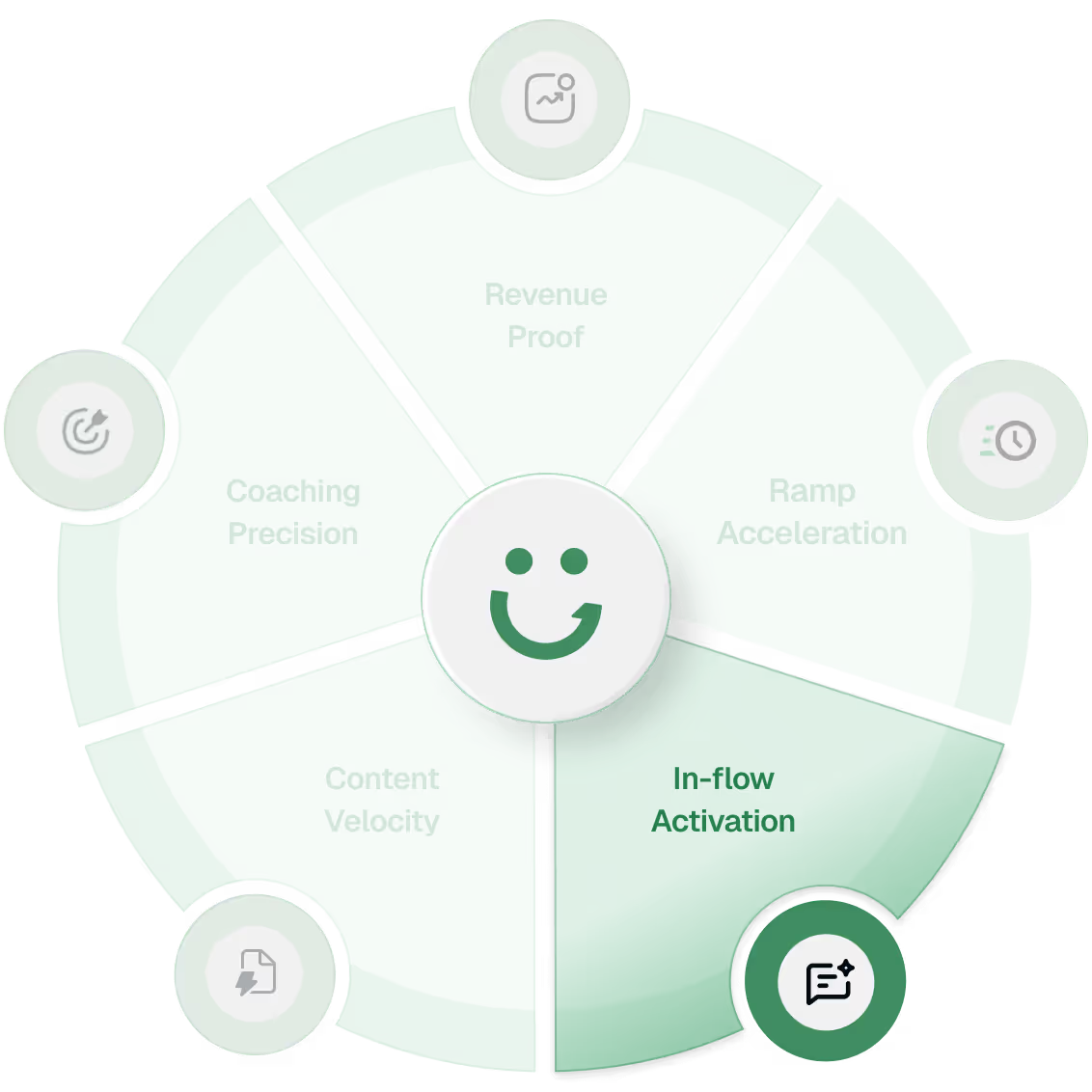
In-Flow Activation
Built Around the Rep, Not the Platform
Letter.AI Approach
'Log into Letter.AI for AI help', Ask Letter AI Agent for assistance
Activation Approach
Shows up in CRM, email, calendar. System injects without asking.
Outcome: Focused reps. Faster deals. No platform dependency.
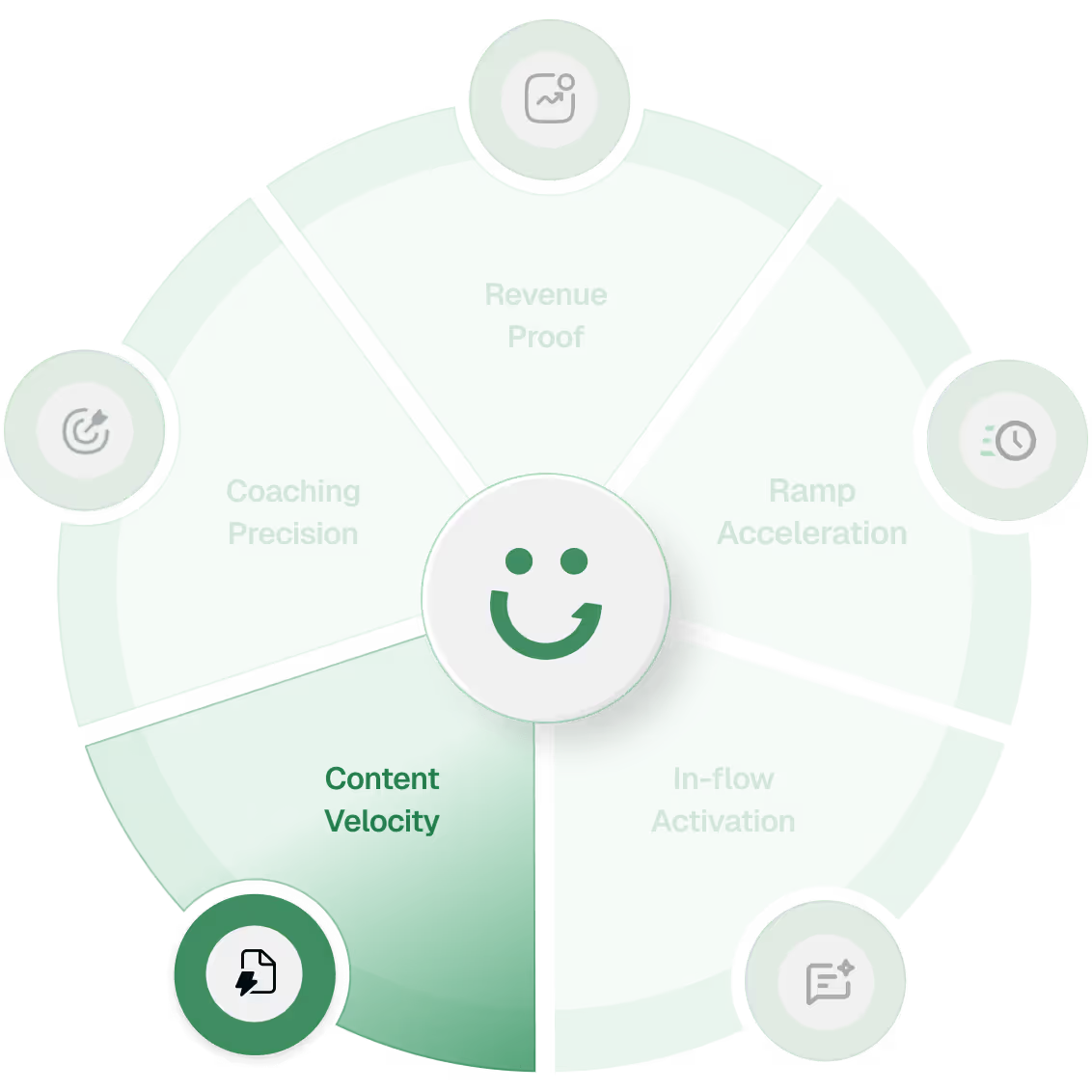
Content Velocity
Confidence, Not Volume
Letter.AI Approach
AI generates content at scale, Unified content library
Activation Approach
Right content at right moment. Context-matched content in flow.
Outcome: The right asset for this buyer, this moment, without hunting.
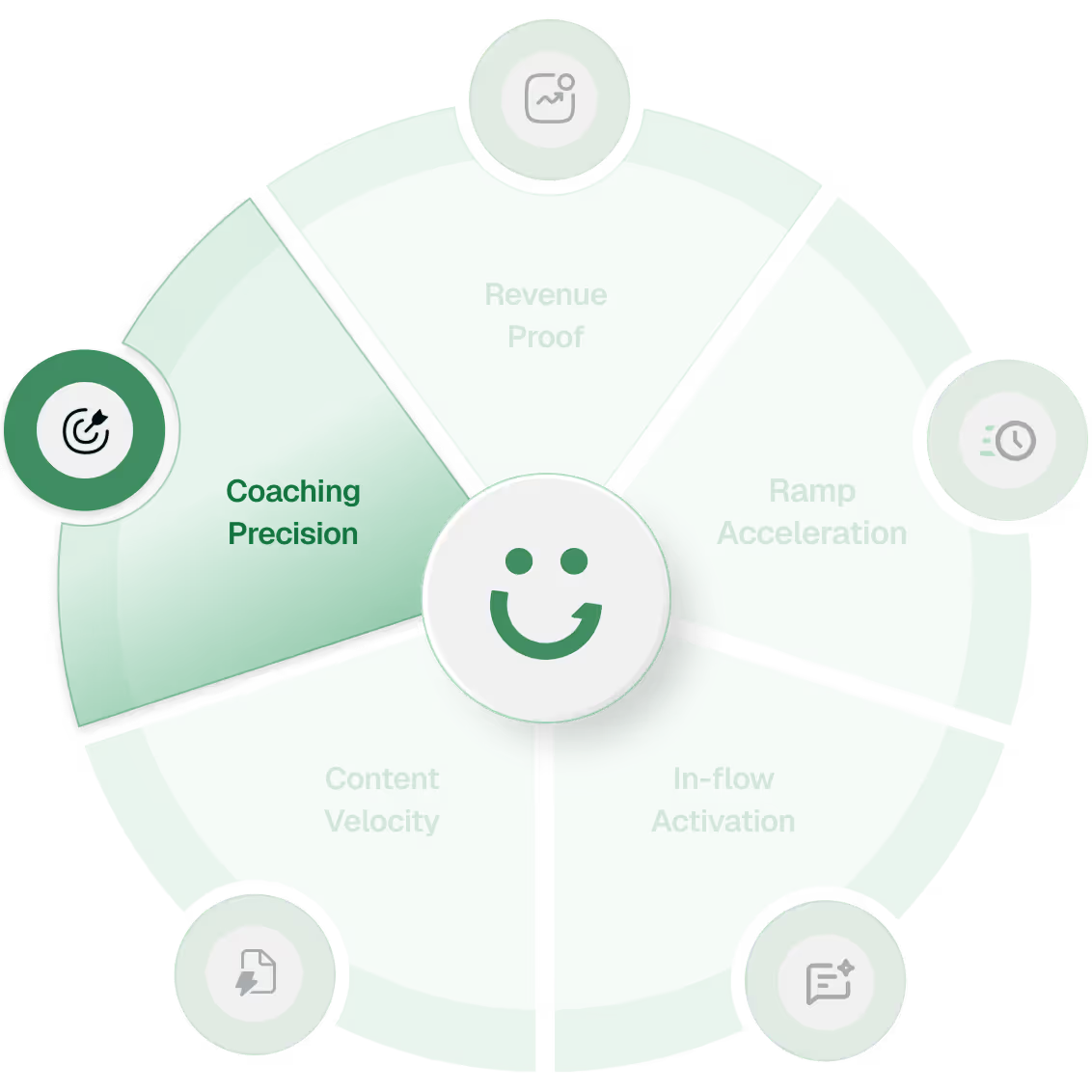
Coaching Precision
The One Thing That Moves This Deal
Letter.AI Approach
AI roleplay feedback (practice), Coaching after practice sessions
Activation Approach
Real-time intervention (execution). Single focused cue during deal.
Outcome: ±5% forecast accuracy. Managers as pit crew chiefs, not roleplay reviewers.
Revenue Proof
From Correlation to Causation
Letter.AI Approach
Track AI feature usage, Content engagement analytics
Activation Approach
'This action moved this deal' (attribution). Revenue attribution.
Outcome: Defensible ROI. Strategic credibility without engagement proxies.
Escaping AI-Native Enablement Is Simpler Than You Think.
Migration Timeline
What Makes It Fast
You're Not Under-AI'd. You're Not Under-Unified.
You're Under-Activated.
Frequently Asked Questions
Letter.AI is AI-native and unified. Isn't that the future of enablement?
Being AI-native within the enablement paradigm optimizes the enablement paradigm. The question isn't whether Letter.AI is advanced — it's whether reps can execute without visiting a platform. Revenue Activation starts from a different architecture: signal injection at the moment of execution.
They have AI roleplay. Doesn't that solve the knowing-doing gap?
AI roleplay helps reps practice. It builds familiarity with scenarios. But practice happens before the deal. When a CFO throws an unexpected objection on a live call, you can't pause to do a roleplay. Activation means support during the moment of execution, not preparation for it.
They're a G2 Momentum Leader with 21 badges. Doesn't that validate their approach?
G2 measures platform satisfaction and market momentum within the enablement category. It doesn't measure whether platform usage causes deals to close. Category leadership validates their position in enablement — not that enablement is the right frame for the Agentic Era.
How long does migration actually take?
Most teams go live in days. AI-powered content mapping eliminates manual recreation. And because there's no new platform to adopt, adoption is immediate. Compare that to Letter.AI's typical multi-week implementation and ongoing platform training.
How do you measure ROI differently?
Letter.AI measures engagement: AI feature usage, roleplay completions, content views. GTM Buddy measures causation: which enablement actions directly moved which deals. The shift from 'reps used our AI tools' to 'this action increased win rate by 12%' is the difference between activity and proof.
What does 'Revenue Capacity' actually mean?
Revenue Capacity is the maximum amount of pipeline a rep can carry, progress, and close without judgment breakdown or cognitive overload. It's not a productivity metric — it's an economic constraint. Letter.AI optimizes platform engagement. GTM Buddy activates capacity.