
Practice is Preparation. Activation is Execution
50% faster ramp claims. GTM Buddy activates the revenue capacity that practice alone was never designed to unlock.
From 'Practice Arena' to Activation Engine.
From Simulation to Signal.
The Real Cost Isn't the $18.3M Valuation.
It's the Gap Between Practice Scores and Revenue Causation.
- Organizations adopt AI roleplay for training
- Reps complete practice simulations
- Scorecard metrics improve
- Managers get consistent coaching feedback
- Reps still spend 70% of time on non-selling work
- Revenue impact still can't be proven at the deal level
Your Capacity Gap (Example)
don't connect to specific deals won or lost.
250,000 Simulations Later,
The Transfer Problem Remains Unsolved.
Hyperbound has built impressive AI roleplay capabilities: Custom ICP bots, multiparty scenarios, AI scorecards, real call scoring, and 25+ language support. Their messaging: 'Pioneered AI Sales Roleplay.' But practice is not the same as execution. Athletes don't play their best games in practice. Pilots don't fly their hardest flights in simulators.
Their current AI capabilities include:
Hyperbound's Approach
- Roleplay lives in the platform
- Rep practices before the deal
- Relies on memory transfer
- 'I hope they remember what we practiced'
Activation Approach
- Activation lives in the workflow
- System supports during the deal
- Eliminates memory dependency
- 'The system shows them what they need'
Hyperbound built the best practice arena.
GTM Buddy eliminated the gap between arena and field.
$18.3M in Funding and Peak XV Backing
Validate Training Innovation, Not Revenue Causation.
Technology innovation in roleplay simulation
Growth trajectory and market timing
Team execution capability
Whether reps can execute without visiting a practice platform
Whether 'faster ramp' translates to revenue capacity
Whether the practice category itself solves the execution constraint
that training alone solves the Agentic Era's execution constraint. Hyperbound can raise unlimited capital
for practice innovation. The question is whether your revenue constraint lives in the practice arena - or
in the live deal moment.
Funding momentum ≠ Architectural transformation.
Five Readiness Levers. One Activation System.
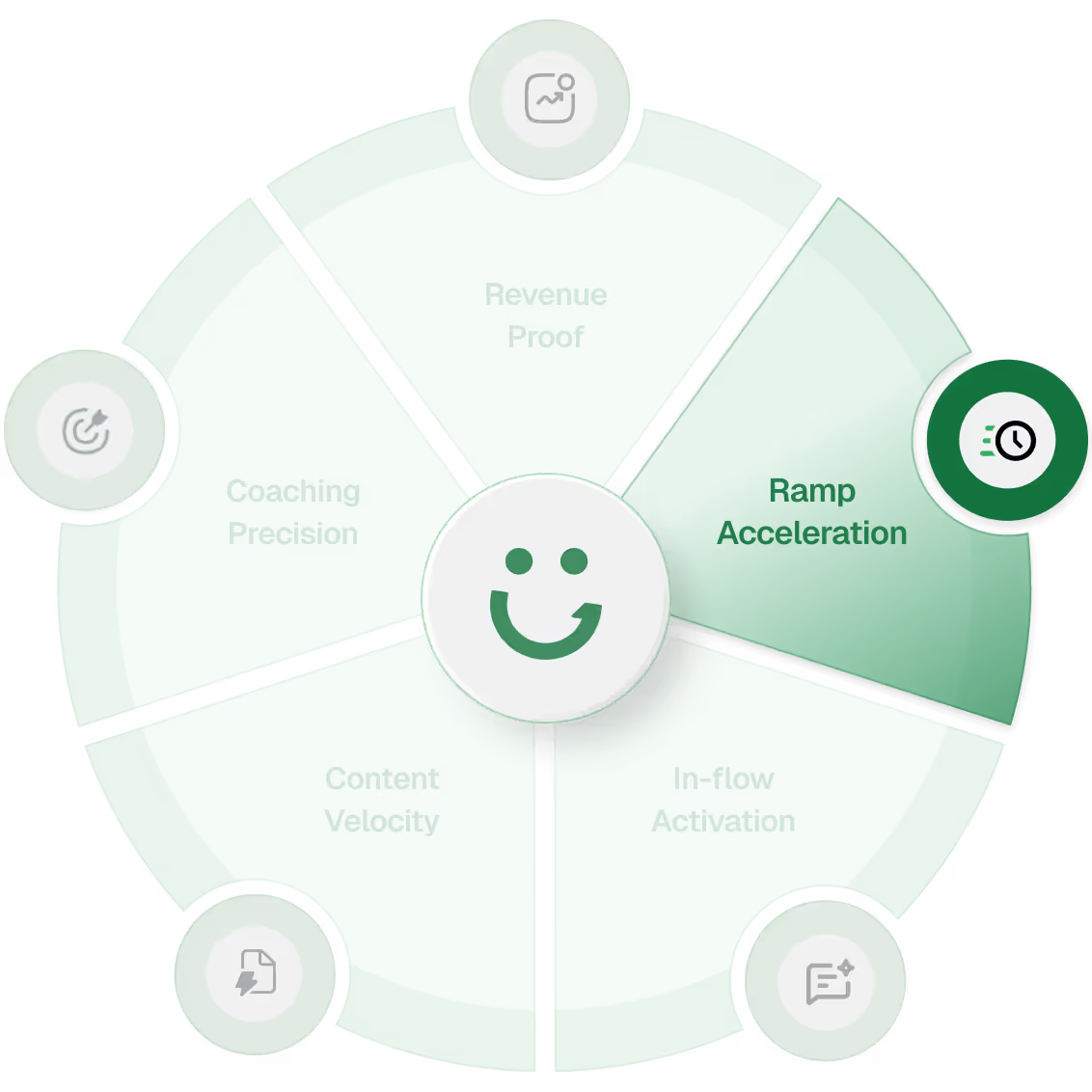
Ramp Acceleration
Be Ready This Quarter, Not the Next One
Hyperbound Approach
Roleplay simulations until certified, Track practice scores
Activation Approach
Learning reinforced in live workflow, Track time-to-first-deal
Outcome: Faster ramp measured in deals, not simulations.
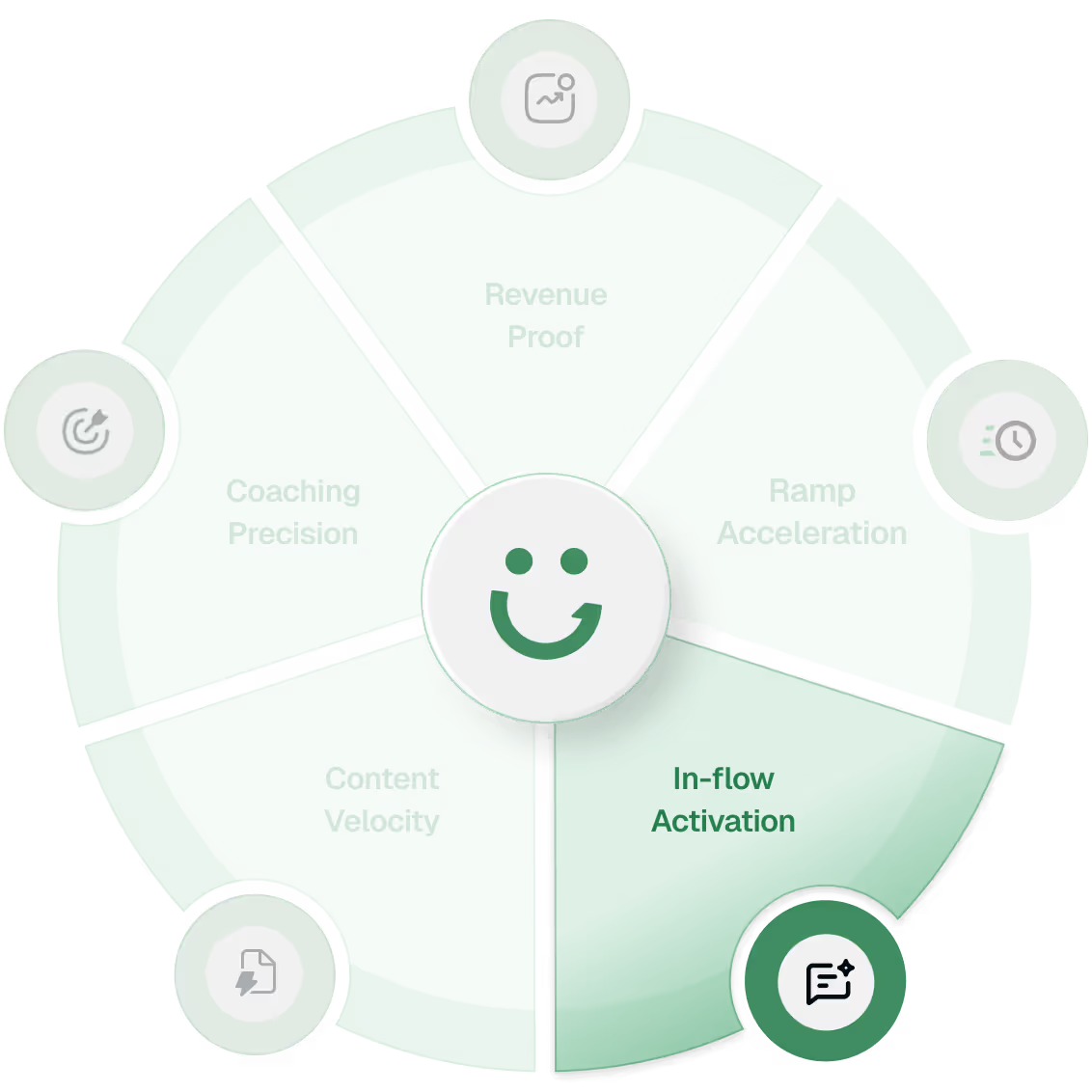
In-Flow Activation
Built Around the Rep, Not the Platform
Hyperbound Approach
'Practice in Hyperbound, execute elsewhere', Hope reps remember what they practiced
Activation Approach
Shows up in CRM, email, calendar. System injects when they need it.
Outcome: Focused reps. Faster deals. No transfer dependency.
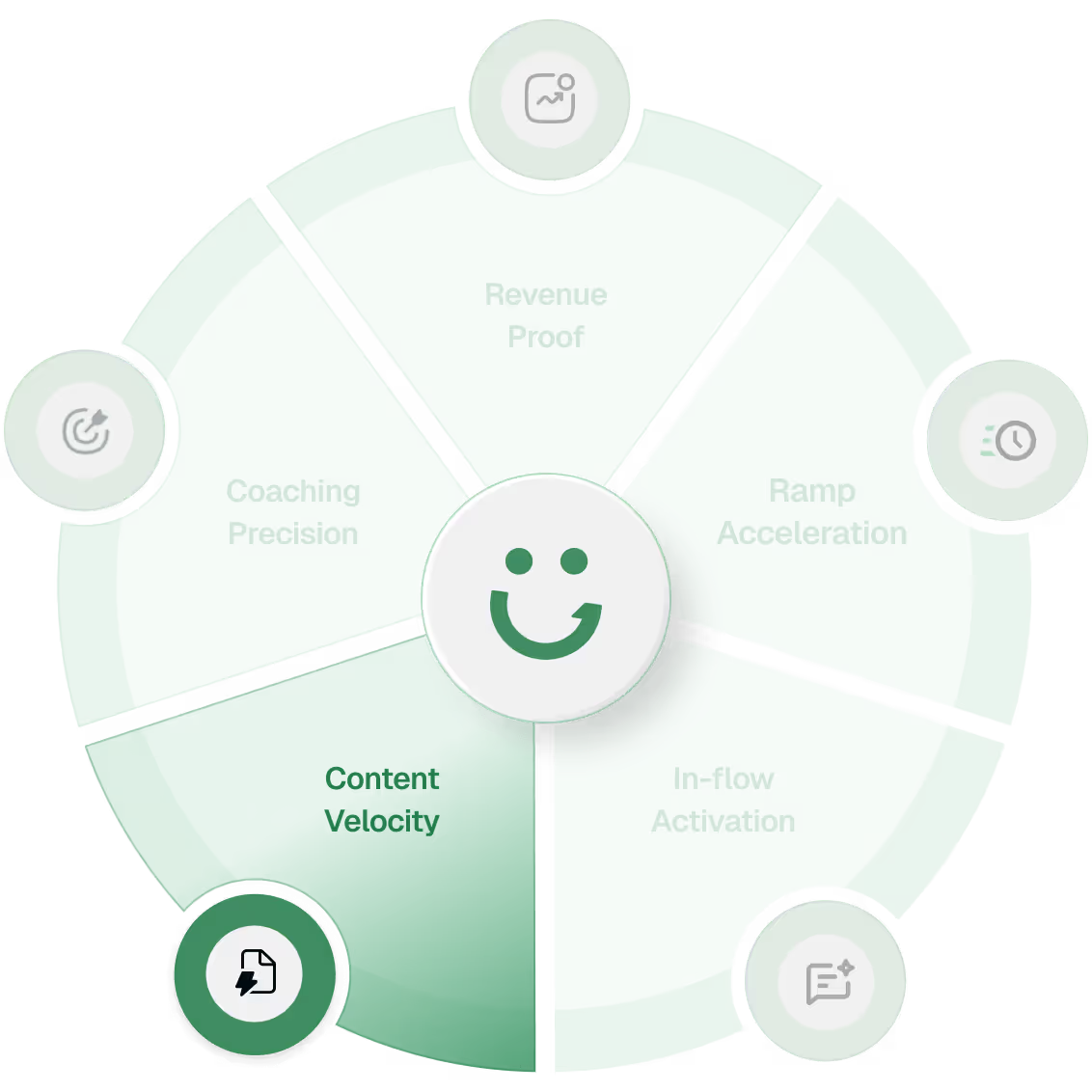
Content Velocity
Confidence, Not Volume
Hyperbound Approach
Practice objection handling scenarios, Roleplay focuses on conversation skills
Activation Approach
Right content at right moment. Context-matched proof points in flow.
Outcome: The right asset for this buyer, this moment, without recall dependency.
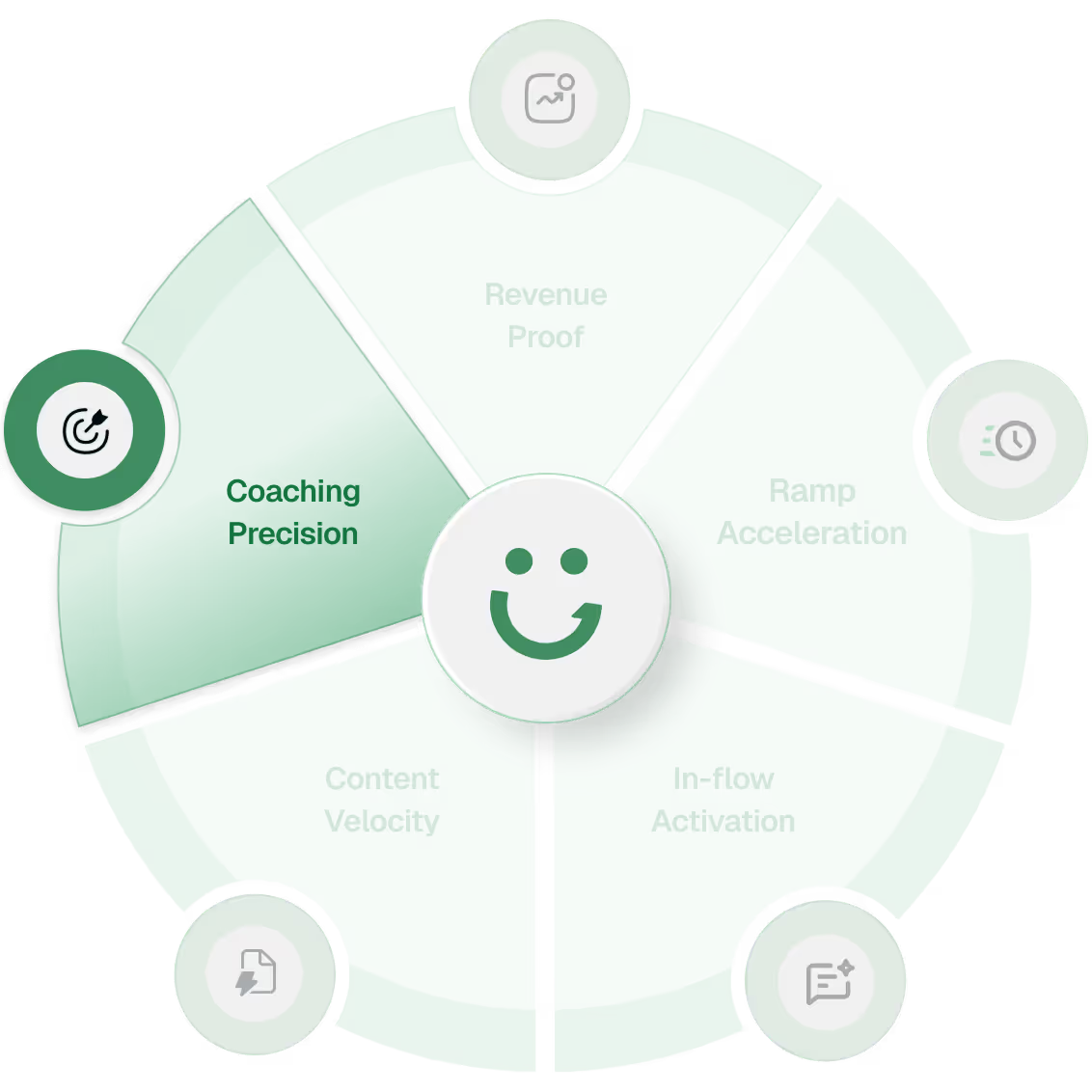
Coaching Precision
The One Thing That Moves This Deal
Hyperbound Approach
AI scorecards on practice sessions, Call scoring after the conversation
Activation Approach
Real-time intervention on live deals. Single focused cue during conversation.
Outcome: ±5% forecast accuracy. Managers as pit crew chiefs, not practice reviewers.
Revenue Proof
From Correlation to Causation
HYPERBound Approach
Track roleplay completions, scores, 'Ramp time reduced by 50%'
Activation Approach
'This action moved this deal' (attribution). Revenue attribution.
Outcome: Defensible ROI. Strategic credibility without
practice proxies.
From Practice Arena to Activation Engine.
Migration Timeline
What Makes It Fast
You're Not Under-Practiced
You're Under-Activated.
Frequently Asked Questions
Hyperbound claims 50% faster ramp. Isn't that proof it works?
Faster ramp to practice-readiness is valuable. But the question is: does practice-readiness automatically convert to deal-readiness? The transfer problem — knowing what to say vs. saying it under pressure — isn't solved by more simulation.
They're backed by Peak XV and Y Combinator. Doesn't that validate the approach?
Investor backing validates market opportunity and technology innovation in AI sales training. It doesn't validate that practice completion causes deals to close. VC confidence is about growth potential, not revenue causation.
Do I have to choose between practice and activation?
No. Many teams keep practice tools for onboarding while adding activation for execution. Practice builds familiarity. Activation supports performance. The question is: what's the gap in your current model?
How is GTM Buddy different from roleplay?
Roleplay happens before the deal — you practice scenarios, build familiarity, develop confidence. Activation happens during the deal — the system detects context and injects support at the moment of execution. Practice is preparation. Activation is performance support.
How do you measure ROI differently?
Hyperbound measures practice outcomes: simulation completions, scorecard improvements, ramp time. GTM Buddy measures causation: which enablement actions directly moved which deals. The shift from 'reps completed 100 simulations' to 'this action increased win rate by 12%' is the difference between preparation and proof.