
The Storage Era Served Its Purpose.
The Activation Era Is Here.
From Enablement to Activation. From Correlation to Causation.
The Real Cost Isn't the Subscription.
It's the Buried Capacity.
- Searching for the 'right' deck
- Guessing which version is current
- Reconstructing context before every call
- Switching between 6 tabs mid-conversation
Your Capacity Gap (Example)
Adding More Agents to Storage Architecture is Not the Same as Building Activation Infrastructure
Since 2025, Highspot has launched four product cycles aimed at agentic positioning.
Highspot Agents (Summer '25), Deal Agent (Fall '25), Deal Intelligence (Winter '26), and GTM Agent (Spring '26). They also added MCP support: their agents can act as MCP servers, so external AI tools can connect to the Highspot platform.
These are real moves. We are not pretending otherwise.
Highspot is still built on a storage-first architecture
- The underlying data layer is still file-based. Highspot’s MCP server exposes files, not a connected knowledge graph.
- Deal Agent still sits on top of a storage-based content library organized in Spots and folders.
- GTM Agent can recommend actions, but the system still fundamentally operates in retrieval mode.
- You can put any number of agents on top of a folder system, the folder system is still the architecture.
GTM Buddy is built differently
- The underlying data layer is a knowledge graph, not a folder system.
- Content reaches the rep in the workflow In-Flow Activation. The rep doesn't search; the system surfaces.
- Nucleus is multi-player by design, the AI teammate coordinates across the revenue team, not just within an individual rep's portal.
- Open MCP is the connective layer, but the value isn't the protocol, it's what's connected to it.
The architecture question is not “who has MCP?” Both vendors have MCP support now. The question is what the MCP layer is exposing. A storage system with an MCP wrapper is still a storage system. An activation engine on open MCP is structurally different.
Adding agents to storage architecture is like putting an AI co-pilot in a library: helpful for browsing, structurally incapable of bringing the book to you at the moment you need it.
The Merger That Changed What You Were Buying
Three things this changes for Highspot customers:
The competitor keeping pricing honest
is gone.
For a decade, Highspot and Seismic were each other's primary pricing pressure. That pressure is gone. PE-controlled entities optimise for margin, not for your roadmap requests.
The next 18-24 months of roadmap belong
to integration.
Every PE-led platform consolidation produces the same arc: integration consumes the roadmap, then one platform sunsets. “Both platforms continue to be supported” is the standard language. You know what it usually means.
Your renewal window is the only leverage moment
you have.
Before the merger closes, Highspot needs to close deals and retain customers. You have negotiating leverage you won't have in 2027. The honest question is whether you use that leverage to negotiate a Highspot discount, or to make a different decision entirely.

Bizzabo didn't switch because Highspot was 'bad.' They switched because they hit the ceiling of what storage architecture can deliver. When enablement lives in a portal, adoption is a constant fight. When activation lives in the workflow, adoption is automatic.
Five Readiness Levers. One Activation System.
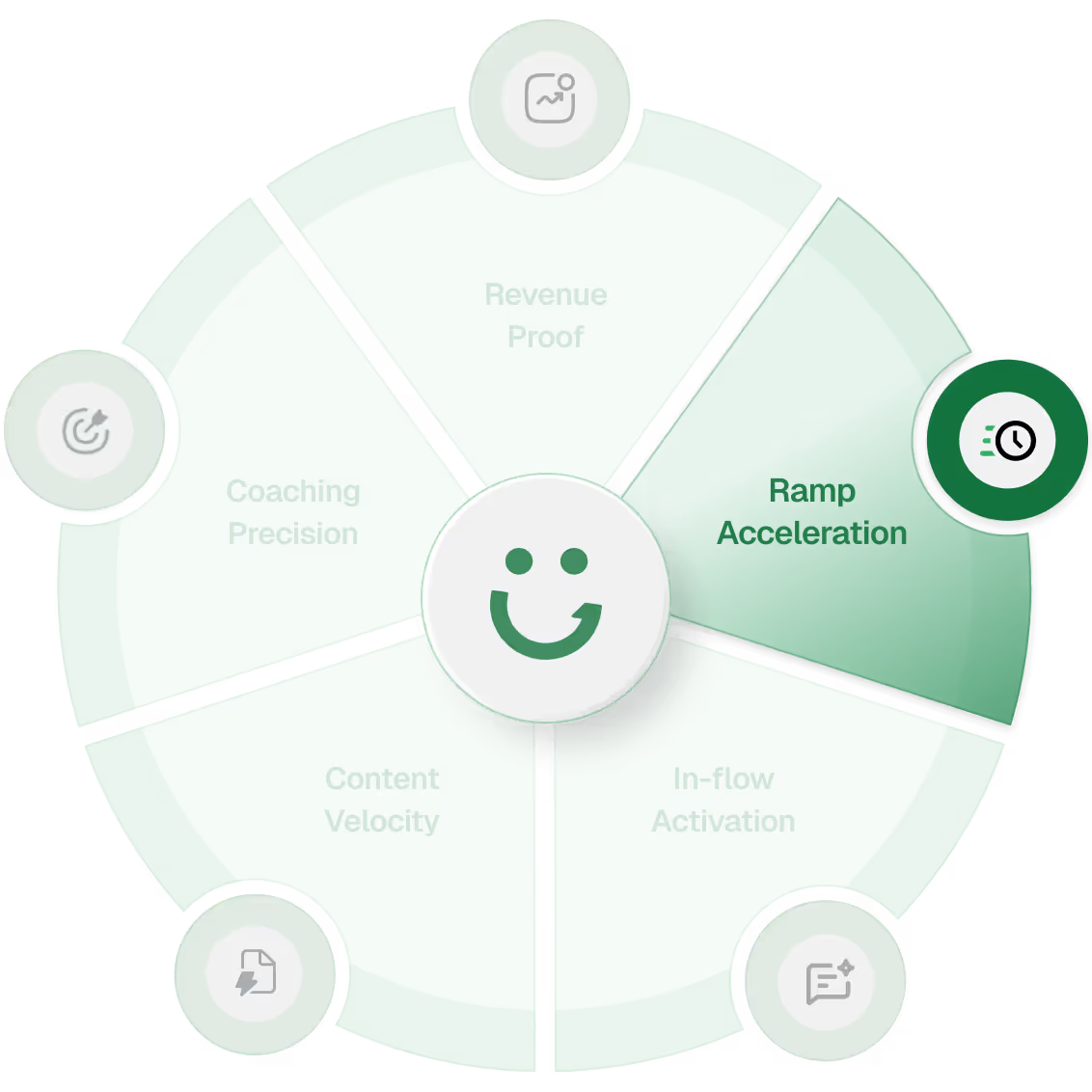
Ramp Acceleration
Be Ready This Quarter, Not the Next One
Legacy Approach
Send reps to 'Sales University' and hope they remember
Activation Approach
Send reps to 'Sales University' and hope they remember
Outcome: Faster ramp. More quota-hitters this quarter.
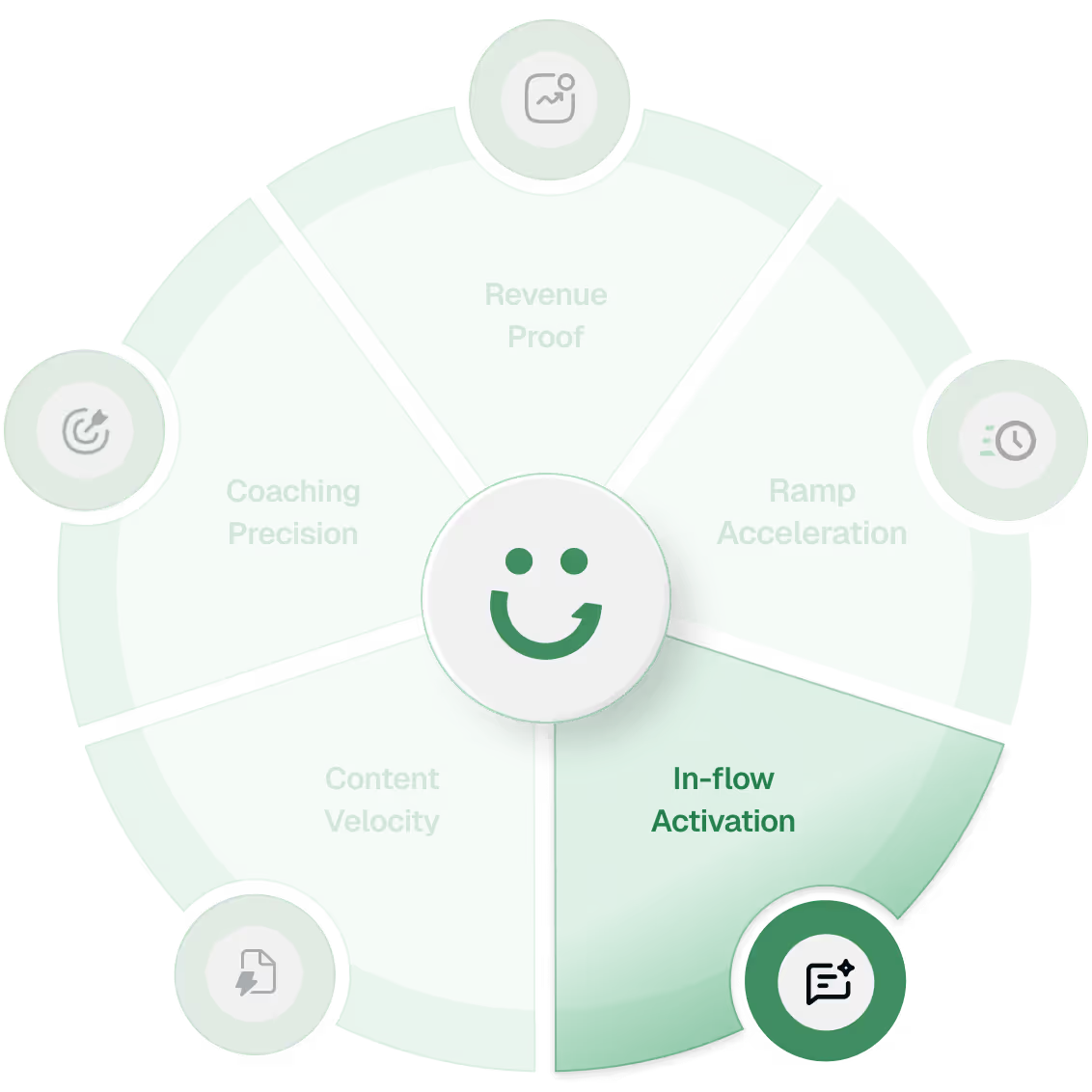
In-Flow Activation
Built Around the Rep, Not the Platform
Legacy Approach
'Log in to find what you need'
Activation Approach
Shows up in CRM, email, calendar, zero switching
Outcome: Focused reps. Faster deals. No interruption.
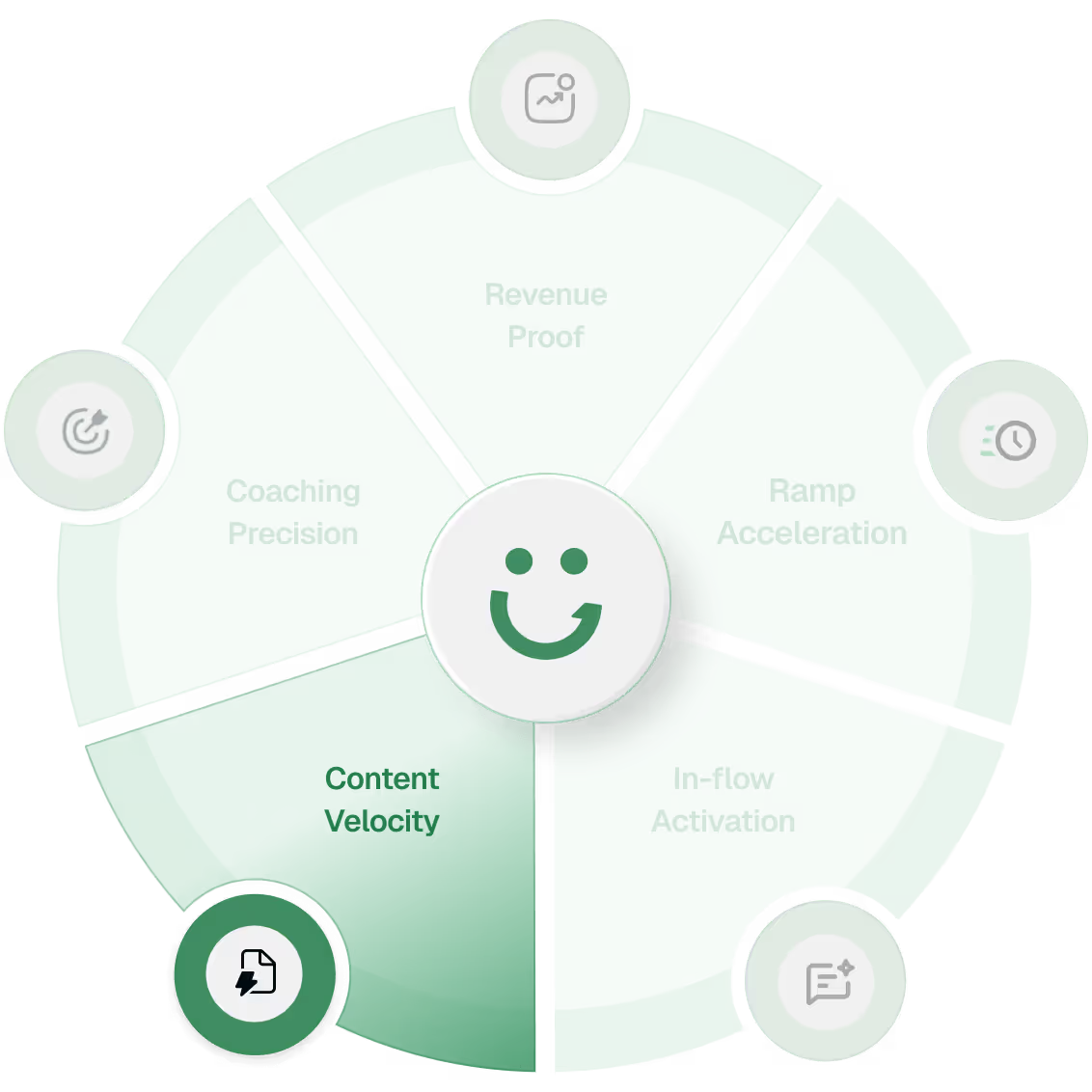
Content Velocity
Confidence, Not Volume
Legacy Approach
'It's somewhere in the folder' + 30 minutes + 5 Slack messages
Activation Approach
One hub, always current, 10 seconds, auto-tagged
Outcome: +5 hours of selling time reclaimed per rep per week.
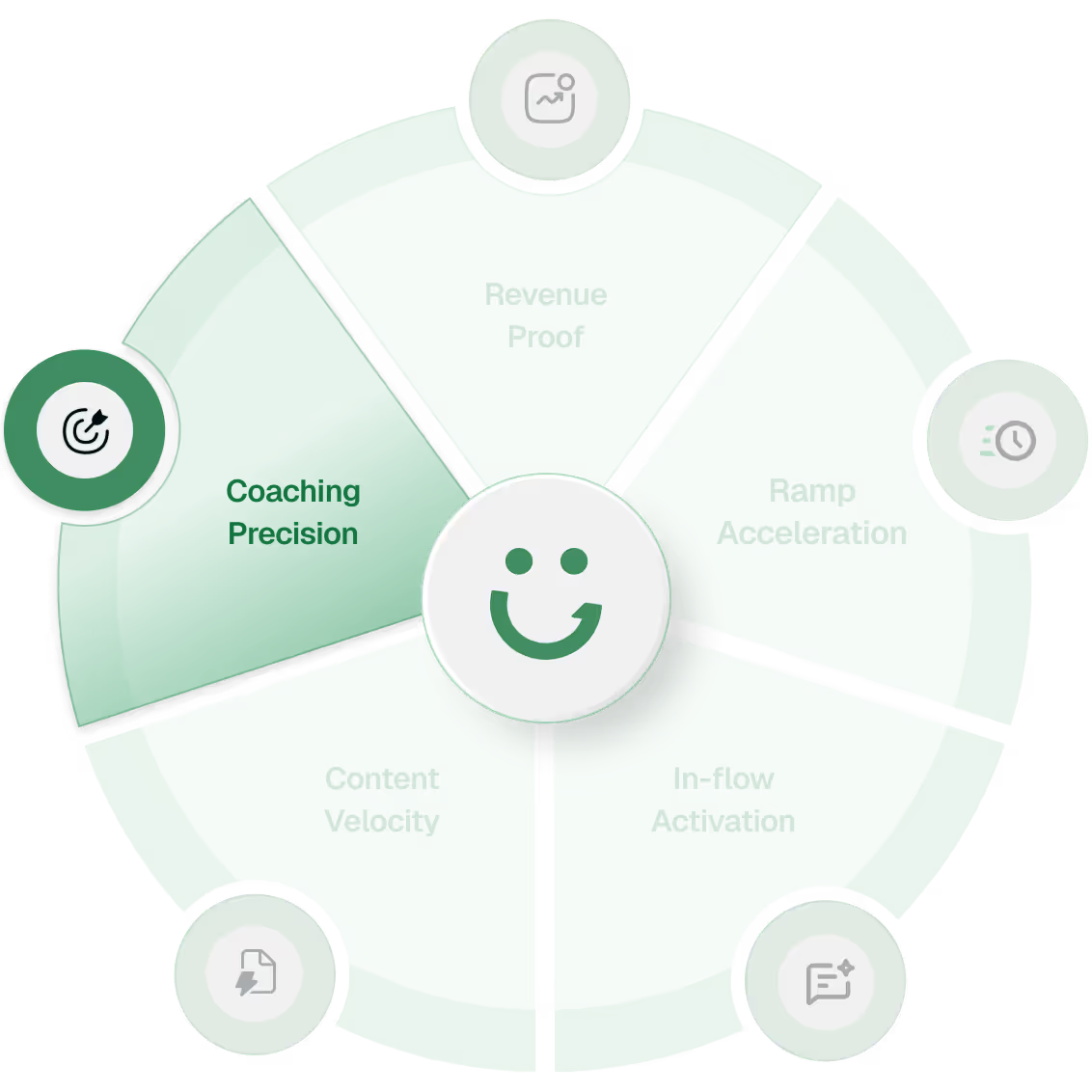
Coaching Precision
The One Thing That Moves This Deal
Legacy Approach
30-point scorecards, coaching happens after the deal dies
Activation Approach
One focused adjustment, intervention while deal is alive
Outcome: Faster improvement. Better forecast accuracy.
Revenue Proof
From Correlation to Causation
Legacy Approach
'50 people viewed this deck' (activity reports)
Activation Approach
'This deck increased win rate by 12%' (revenue attribution)
Outcome: Defensible ROI. Strategic credibility with the CRO.
Escaping the Constraint Is Simpler Than You Think.
Migration Timeline
What Makes It Fast
You're Not Underpowered. You're Under-Activated.
Frequently Asked Questions
We've invested heavily in Highspot. Is migration worth the disruption?
The question isn't whether Highspot is working. It's whether it's activating revenue. If your reps are still spending significant time on non-selling work, if you still can't prove enablement's revenue impact, the architecture not the investment is the constraint. Migration isn't disruption; it's escape.
Highspot has way more features. Aren't we losing capabilities?
You're losing complexity, not capability. Highspot's feature breadth optimizes for content management at scale. GTM Buddy optimizes for revenue activation. The question isn't 'which has more features?' It's which unlocks more capacity?'
Highspot just launched AI agents. Doesn't that solve the activation problem?
Highspot has shipped four product cycles around agentic positioning, Highspot Agents, Deal Agent, Deal Intelligence, and most recently GTM Agent. They also support MCP. These are real moves and we don't dismiss them.
The question isn't whether Highspot has agents. It's what the agents are operating on. A Deal Agent recommending next steps based on a folder system is structurally limited by the folder system. An activation engine on open MCP isn't. The architecture matters more than the agent label.
How long does migration actually take?
Most teams go live in weeks. AI-powered content mapping eliminates manual hierarchy recreation. And because there's no new platform to teach, adoption is immediate. Compare that to Highspot's typical 2-4 month implementation.
What does 'Revenue Capacity' actually mean?
Revenue Capacity is the maximum amount of pipeline a rep can carry, progress, and close without judgment breakdown or cognitive overload. It's not a productivity metric; it's an economic constraint. Highspot manages content. GTM Buddy activates capacity.
Highspot just merged with seismic. Does that change anything for migration?
Yes, In three ways:
1. The pricing pressure between the two largest vendors is gone. Permira optimises for margin.
2. Roadmap is now dominated by integration for 18-24 months.
3. Your renewal window is the leverage moment before the merger closes a window that won't exist again until 2027. Most teams use this moment to decide whether to negotiate a discount on a platform they're uncertain about, or to make a different decision entirely. The 3-minute Merger Impact Assessment maps your specific exposure.
Highspot is a Gartner leader. How can we move off it?
Gartner's 2025 Magic Quadrant for Revenue Enablement Platforms named Highspot a Leader, positioned highest for Ability to Execute on legacy enablement. We don't dispute that. The question is whether legacy enablement is still the right category not whether Highspot is the best execution of it. Being the best at the old model doesn't help when the model itself has changed. Our position: the category itself is shifting from enablement to activation. Gartner will catch up. Customers shouldn't wait.
Doesn’t highspot also support MCP now?
Yes, Highspot announced MCP support in their Summer 2025 launch. Their MCP server exposes the Highspot platform to external AI tools. We acknowledge it. But MCP is a protocol, not an architecture. What matters is what's behind the protocol. Highspot's MCP server exposes a content storage system organised in Spots folders. Nucleus's MCP layer exposes an activation knowledge graph. Both are MCP-compatible. One is architecturally built for retrieval. The other is architecturally built for activation. The protocol is the same; what flows through it is different.