
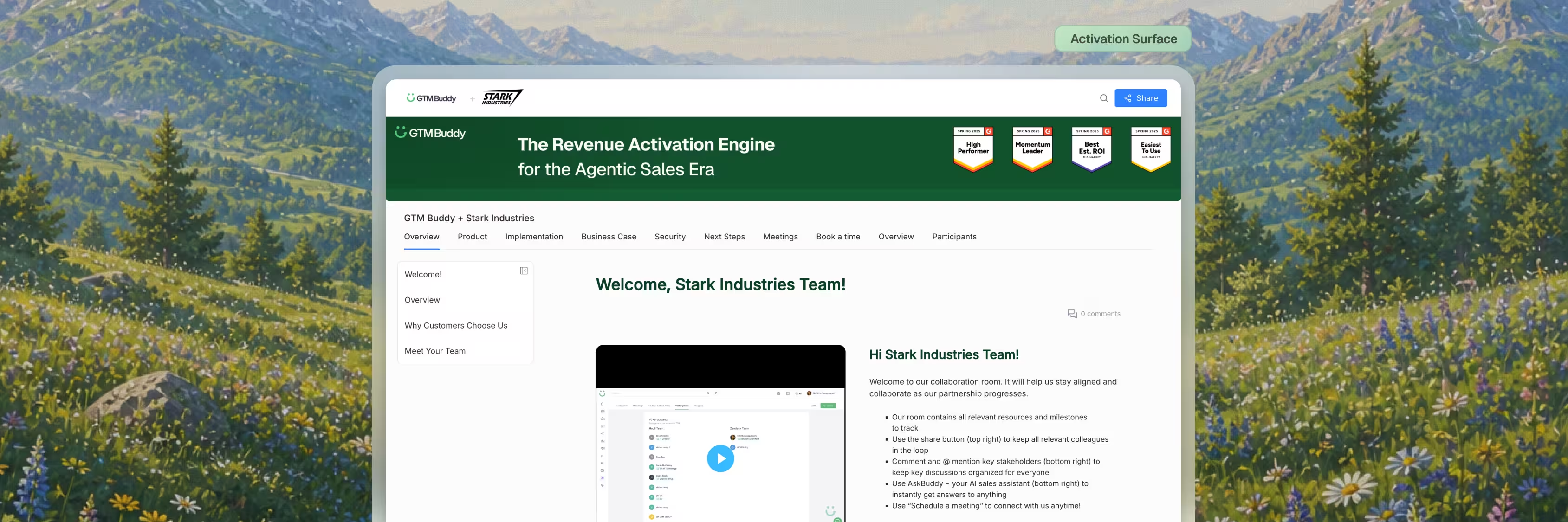
When most people hear “Digital Sales Room,” they picture a link. A place to put the deck, the case study, and the pricing sheet so they do not get buried in email threads. A tidier version of an attachment.
That is the storage frame. And it is the wrong frame entirely.
A Digital Sales Room is not a container. It is an activation surface. It is a dynamic, trackable, intelligent space where influence happens. The name is an accident of history. The capability is something much more significant.
I have built three software categories from scratch. The pattern I keep seeing is this: the most powerful tools get named after their first obvious use case, and then the name limits how people imagine what is possible. We called Customer Success a “customer success tool” before we understood it was the infrastructure for an entirely new business function.
DSRs are in the same moment. Everyone thinks they are deal rooms. They are not. They are the first piece of activation infrastructure that works anywhere humans need to align, persuade, or move other humans to action.
That is a much bigger idea than a tidier alternative to email attachments.
The Storage vs. Activation Distinction
Here is the structural argument.
A storage tool holds content until someone retrieves it. A folder. A drive. A content library. The content sits and waits. The rep remembers to look, or they do not.
An activation surface does something different. It delivers the right content to the right person at the right moment, tracks what happens when they engage with it, and changes what you do next based on those signals. It is not passive. It is intelligent.
A DSR does not just store your deck. It tells you which slides your CFO spent twelve minutes on, which sections she skipped, and whether she forwarded it to the COO at 11 pm on a Sunday.
That is not a storage problem being solved. That is a different category of tool doing a fundamentally different job.
And once you understand the DSR as activation infrastructure rather than a deal room, you start seeing it everywhere that influence needs to happen, not just in sales cycles.
The Seven Places DSR Infrastructure Actually Belongs
1. Inside the buying committee, not just with your champion
Most enterprise deals involve six to eight stakeholders. You know two or three of them well. The rest are evaluating you from content your champion forwards, conversations you are not in, and criteria you have never been told.
Activation infrastructure changes this. Instead of one room, you build persona-specific tracks: an ROI and TCO track for the CFO, a revenue capacity and forecast accuracy track for the CRO, a compliance and data handling track for IT. Each stakeholder gets the version of the argument that maps to what they actually care about.
And you see exactly which stakeholders are engaged versus dark, before the deal goes cold, not after.
2. Inside your champion, arming them to sell internally
Here is a pattern I have seen in every company I have built: champions buy on Tuesday and then spend three months trying to get internal approval. Your product is no longer being evaluated by the person who understands it. It is being summarised secondhand to executives who have never seen a demo and are being asked to approve a budget line.
The activation surface solves this. A champion activation room gives your buyer everything they need to make the internal case: an executive summary in their language, an ROI model pre-filled with their data, objection handlers for internal skeptics, and a “what happens if we do not act” narrative. The champion does not have to build the business case from scratch. They deploy infrastructure you built for them.
You also know when the CFO opens it. And how long they spent on the pricing section.
The champion activation room is Inception in sales form. You are not just selling to the champion. You are arming the champion to sell the deal internally, with your content, your framing, and your signals flowing back to you.
3. Inside the renewal cycle, where most companies treat revenue defensively
Most renewal conversations are defensive. Here is what you used last year. Here are your usage stats. Please do not leave.
A renewal activation room changes the posture. Instead of a usage report, it is a value realisation story: revenue influenced this period, capacity unlocked across the Five Levers, outcomes delivered versus outcomes promised. Then it moves forward to new capabilities the team has not adopted yet, expansion opportunities, and what the next phase looks like.
The renewal becomes a re-sell. The activation surface makes that systematic, not dependent on the individual CSM’s ability to tell the story on the day.
4. Inside your CS handoff, where deals go to die slowly
Sales to CS handoffs are where relationship equity evaporates. You have spent six months understanding the customer’s world, their language, their internal politics, the gap between what they said they needed and what they actually need. Then you hand over a Salesforce record and a Slack message.
A handoff activation room changes this. It contains the timeline and commitments, the risks surfaced across the sales cycle, the key stakeholders and their specific priorities, and the three things the CS team should focus on first. The CS team walks into kickoff with context. No ramp-up period. No archaeology.
5. Inside the internal pitch, when you are the one selling upward
This use case surprises people. The activation surface is just as powerful when you are the champion.
An enablement leader pitching a new platform to the CFO, a RevOps leader proposing a process change to the head of sales, a marketing leader making the case for a category creation investment to the board. All of these are sales cycles. They have stakeholders, decision criteria, objections, and a need to move people from skepticism to commitment.
Treat internal initiatives like external sales. Build the activation surface. Know when your CFO reads it and what they spend time on.
6. Inside the partner and ecosystem motion
Channel partners are expected to sell your product without your infrastructure. They have their own content, their own systems, their own habits. The result is partners selling the version of your product they remember from the last enablement session, which was eight months ago.
Partner activation rooms solve this. Co-branded room templates, deal-ready content partners can clone and customise, joint value propositions, always-current messaging. Partner enablement that shows up inside deals, not in a portal nobody visits.
7. Inside analyst and investor relationships
You get thirty minutes with an analyst. Forty-five minutes if you are lucky. That is not enough time to tell the story you need to tell, especially if you are building a new category with a vocabulary that does not exist yet.
An analyst briefing room extends the conversation. Pre-brief materials let you use the call time for discussion rather than orientation. Post-brief materials give the analyst access to depth when they are writing. You see which sections they return to. You know which customers they want to reference.
The same logic applies to investor relationships. A living investor room with progress updates, customer references, and financial data that tracks engagement is a different quality of relationship than a quarterly deck sent by email.
Why the Name Got It Wrong
“Digital Sales Room” anchors the concept to a single use case: the deal. And it implies the room is primarily for the buyer’s benefit, a tidy place to review what the seller has sent them.
The activation surface frame inverts this. The room is not for the buyer’s convenience. It is intelligence infrastructure for the seller. It changes what you know, when you know it, and what you do next.
The companies that win the next decade will not have more content. They will have better activation surfaces, infrastructure that makes influence visible, measurable, and systematic wherever humans need to move other humans to action.
That is a much larger category than a deal room.
And it is one that has barely been named yet.
What This Means for Revenue Activation
At GTM Buddy, we think about activation infrastructure as one of the Five Levers of Revenue Activation, specifically what we call Content Velocity. It is not about how much content you have. It is about whether the right content reaches the right person at the right moment, and whether you can see what happens when it does.
The activation surface is the delivery mechanism for that lever. And like most infrastructure that matters, it does not announce itself. It just quietly changes what is possible.
The deals that close faster. The renewals that expand instead of erode. The internal pitches that get approved instead of deferred. The champions who sell internally without needing to be taught the pitch.
All of it runs on the same infrastructure.
We just need a better name for it.
Sreedhar Peddineni is the CEO and co-founder of GTM Buddy. He previously co-founded Gainsight, where he brought in Nick Mehta as CEO and helped build the company to a $1.1B exit, creating the Customer Success software category in the process. He also co-founded Host Analytics (now Planful), which created the cloud EPM category. GTM Buddy is building Revenue Activation, the third category.


.avif)