
Content Velocity: The Right Sales Asset, Every Deal, In Seconds
Content Velocity is the third lever of Revenue Activation ensuring every rep reaches the current, correct asset for their exact deal context in seconds, without searching, asking, or guessing.
Most sales organisations do not have a content problem. They have a retrieval problem.
The decks exist. The case studies are there. The battle cards were built. Enablement spent months producing them and months more organising them into folders, tags, and portals. The library is full. Almost no one uses it.
The constraint is not availability. It is retrieval speed under deal pressure.
A rep in a live deal cannot stop to search, filter, scroll, and hope the result is current. They ask a colleague. They reuse whatever they sent last time. They go into the call without the right asset at all. The content was always there. Content Velocity is what makes it usable at the speed of the deal.

How Content Velocity Works
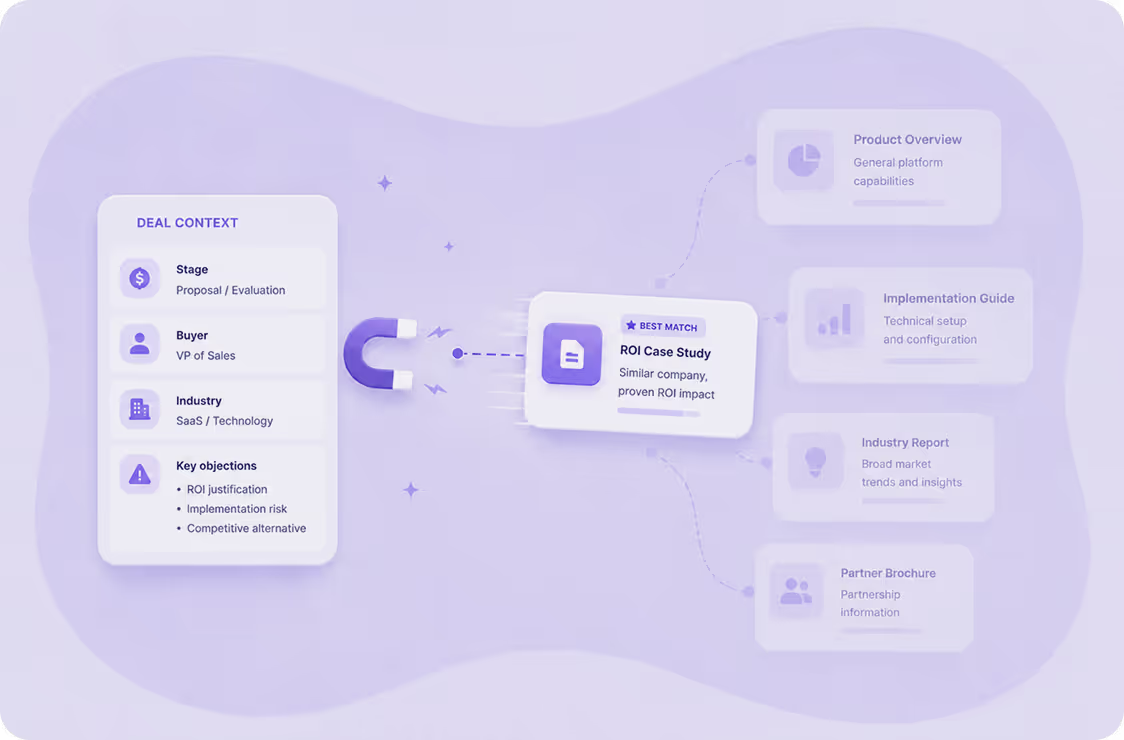
Deal-aware surfacing, no search required
GTM Buddy reads the active deal stage, buyer, industry, competitive dynamic, open objections and surfaces the assets most likely to move it forward. The rep does not form a query. The deal context is the query. One match. Not a folder.
Current version, guaranteed
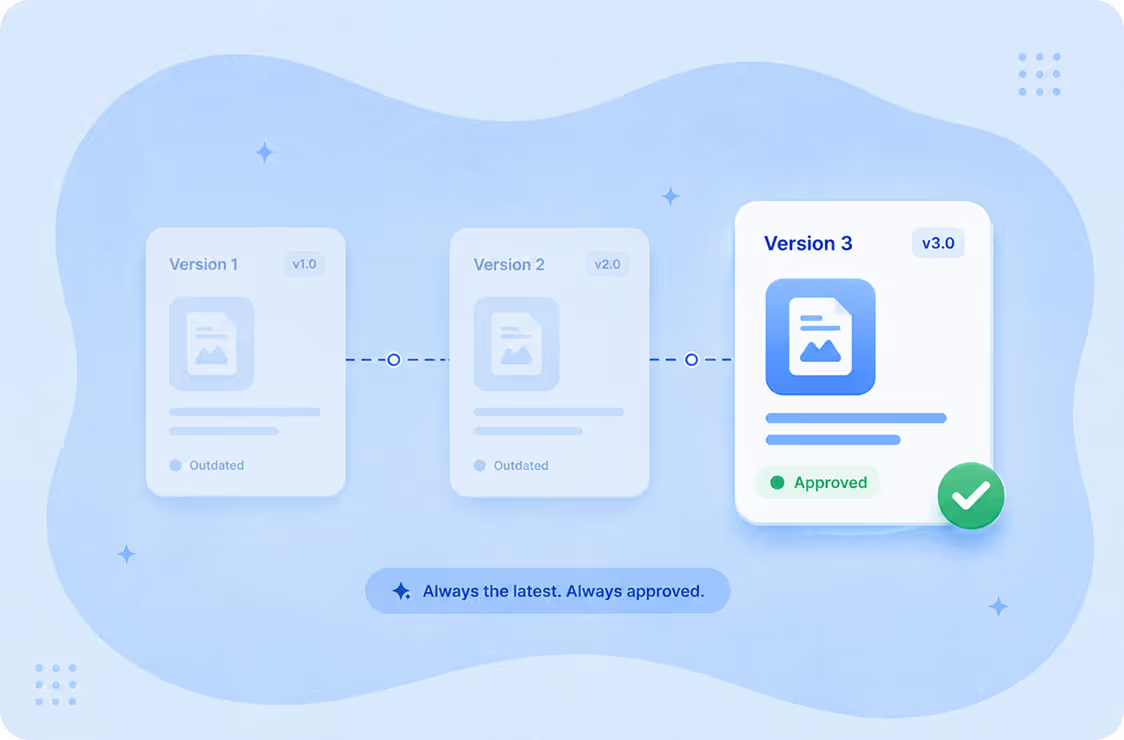
Every asset surfaced by GTM Buddy is the live version. No outdated decks. No deprecated one-pagers. No rep walking into a negotiation with messaging the product team replaced three months ago. Version currency is automatic, not a discipline problem.
Delivered at the moment it is actionable
Content is not served on a shelf. It arrives before the call that needs it, inside the email that should include it, at the point where a competitive objection surfaces. The asset reaches the rep when they can use it not when they remember to look.

Usage signal fed back into the system
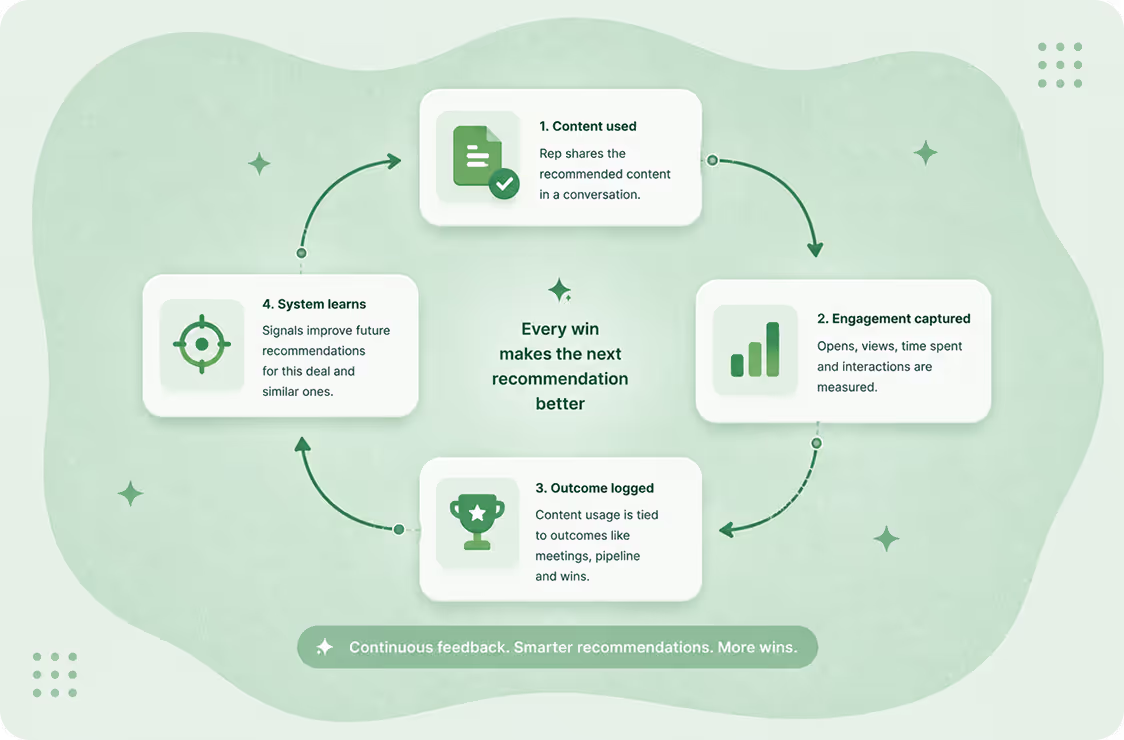
GTM Buddy tracks which assets actually move deals engagement, deal progression after delivery, win correlation. That signal feeds back into what gets surfaced next. The system learns which content wins. Enablement stops guessing.
What Content Velocity Replaces
The dominant content model is a repository with a search bar. Enablement produces the assets, uploads them, organises them into a taxonomy, and trusts that reps will find the right one at the right moment.
That model has two structural failure points. First, it requires the rep to know what they need before they search which means forming a query while managing a live deal. Second, it assumes the search returns one clear answer from a library that may contain dozens of similar assets across multiple versions, campaigns, and audience cuts.
Most reps resolve both failure points the same way: they ask a colleague, reuse the last thing that worked, or skip the content entirely.
Enablement's investment does not convert into execution because retrieval is too slow and too uncertain to be reliable under deal pressure. Content Velocity replaces the search bar with signal. The rep's deal context becomes the query. The system returns one right answer.
The Outcome: Five Hours of Selling Capacity Per Rep Per Week Recovered
The time a rep spends searching for content, requesting current versions from enablement, and second-guessing whether they sent the right asset is not a minor inefficiency. Across a full pipeline, it compounds into a structural drag on capacity.
Recovering five hours per rep per week from content retrieval is a conservative estimate based on published sales productivity research. On a team of twenty reps, that is one hundred hours of selling capacity per week the equivalent of 2.5 additional full-time sellers, at zero additional headcount cost, zero ramp time, and zero quota risk.
The content was already there. Content Velocity is what makes the library irrelevant because the right asset arrives open to the right page before the rep knows they need it.

Frequently Asked Questions
What is Content Velocity in sales?
Content Velocity is the capability that ensures every rep can reach the right sales asset current, contextually matched, and specific to their active deal in seconds, without manual search or version guesswork. It is the third of the Five Levers of Revenue Activation.
Why don't reps use their company's sales content?
Reps avoid repositories because retrieval takes too long under deal pressure. Searching, filtering, and verifying version currency requires a context switch at the exact moment a rep's attention needs to be on the buyer. Most default to reusing familiar assets or asking colleagues rather than navigating a library that returns twenty results when they need one.
How does GTM Buddy surface the right content without search?
GTM Buddy's Nucleus engine reads the active deal stage, buyer signals, industry, competitive context, and open objections and matches that context to the most relevant current asset. The rep receives a recommendation, not a search result. The deal context replaces the query.
What is the difference between a content repository and Content Velocity?
A content repository stores assets and provides access. Content Velocity delivers the right asset at the right moment inside the deal workflow. The repository assumes the rep knows what to look for. Content Velocity removes that assumption entirely the system surfaces the right move before the rep has to ask.


