
In-Flow Activation: Sales Guidance at the Moment of Execution
In-Flow Activation is the second lever of Revenue Activation. It delivers the right signal, asset, or coaching cue inside the rep's active workflow at the moment of execution, without requiring a context switch.
Every rep carries more deals than they can reconstruct on demand. At any given moment, one deal needs a follow-up. Another has a call in forty minutes. A third just surfaced a new objection. The rep already knows what to do but getting there requires leaving the workflow, bouncing between tools, and rebuilding context from scratch.
That reconstruction is the constraint. Not effort. Not capability. Architecture.
Every context switch (every tab opened, every portal visited, every search run) is a tax on the attention that should be on the buyer. In-Flow Activation removes the tax by delivering the signal where the rep already is, at the exact moment they can act on it.

How In-Flow Activation Works
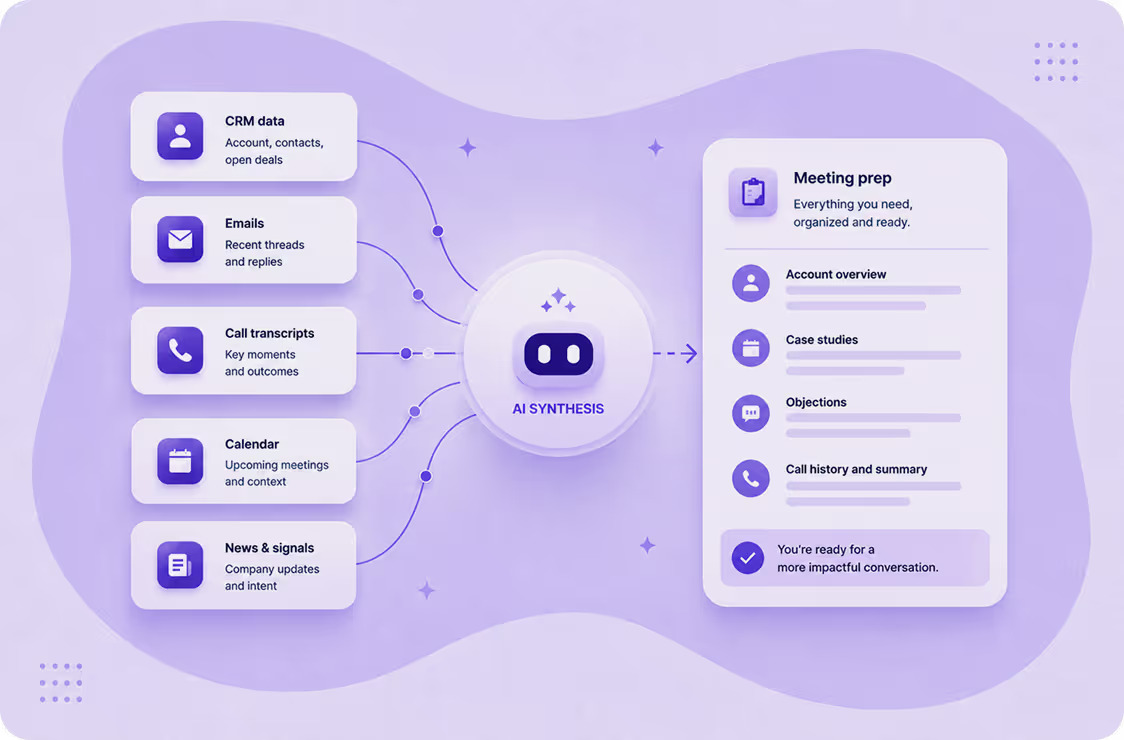
Pre-call synthesis, automatically assembled
Before a meeting, GTM Buddy builds the full picture deal context, buyer signals, open risks, recommended angles from CRM data, call history, and communication threads. The rep walks in with a clear point of view. Not a stack of tabs they assembled themselves.
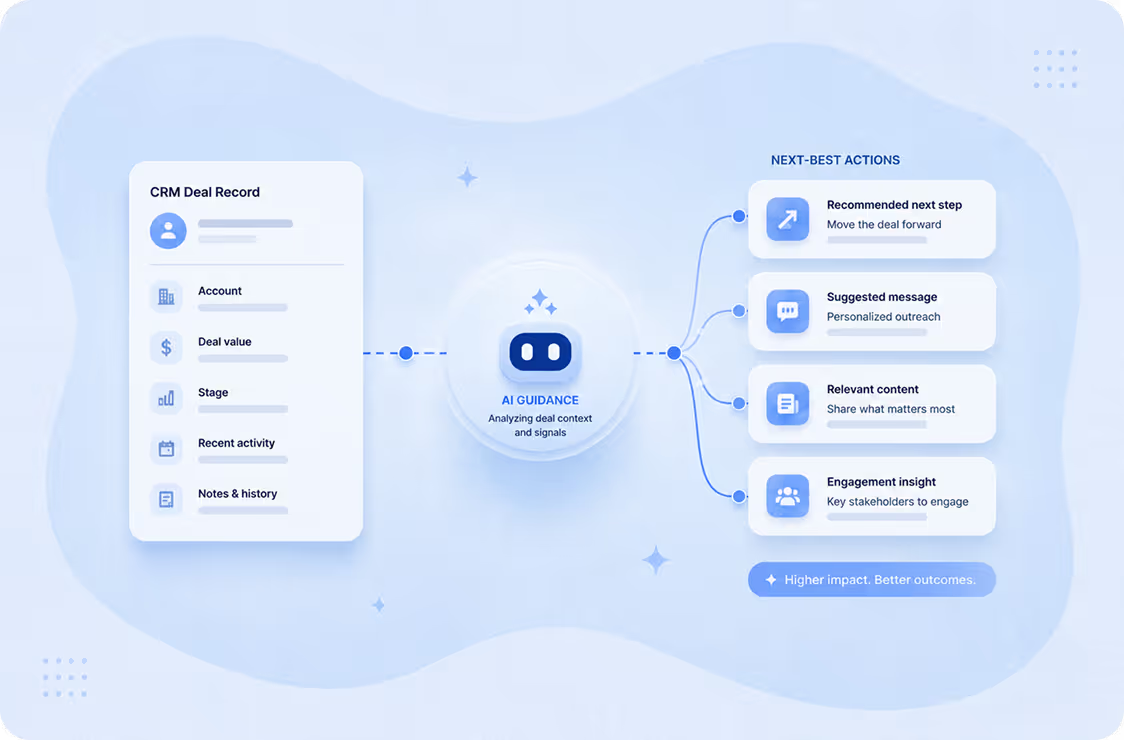
CRM-embedded next-best actions
Deal-specific guidance surfaces inside the active deal record. The right move, the right message, the right asset inside the CRM, not one tool removed from it. The rep never breaks flow to know what to do next.
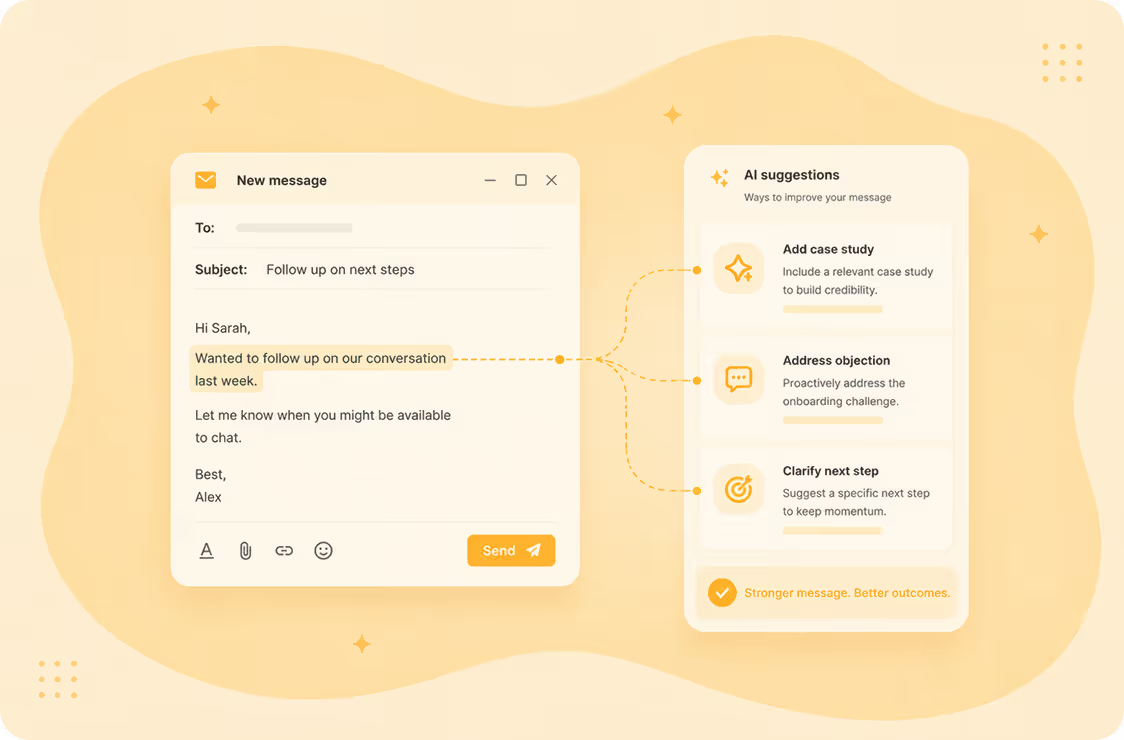
In-workflow communication support
Before a rep sends a follow-up email, GTM Buddy validates the approach in context flagging gaps, sharpening the framing, aligning the message to where the deal actually is. The rep sends with confidence, not with hope.
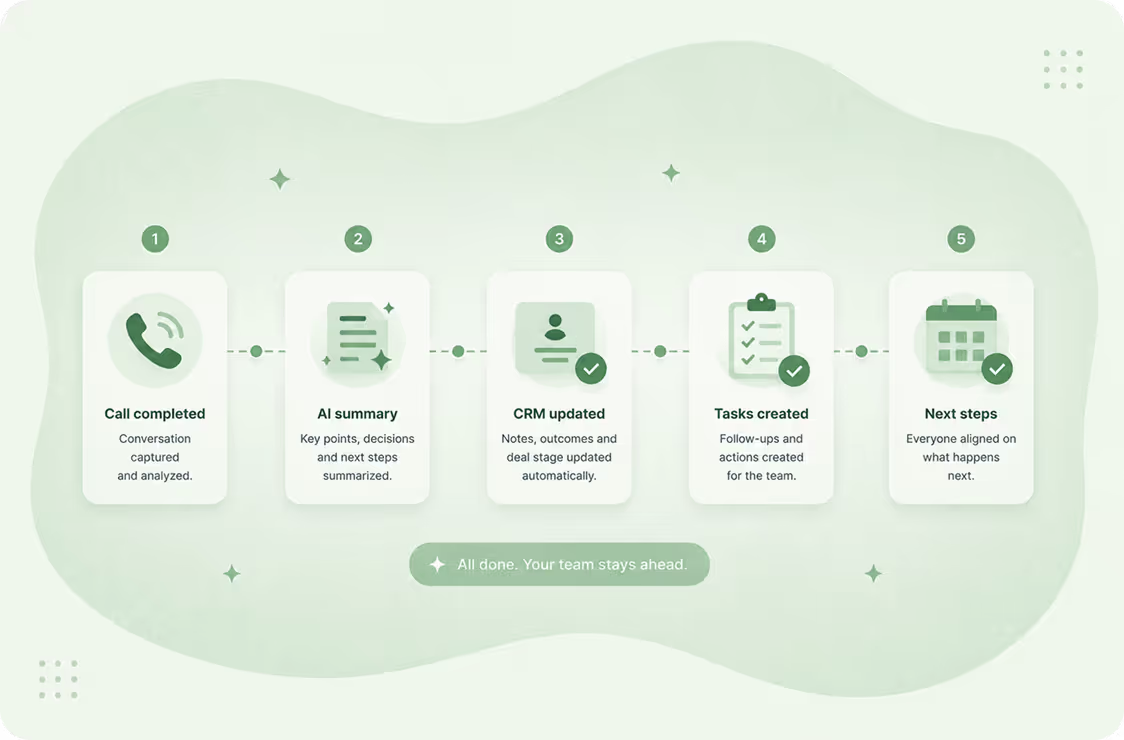
Post-call automation, immediate
After the call ends, summaries, CRM updates, and next steps are generated without rep input. No admin drag. No manual logging. The deal keeps moving while the rep moves to the next conversation.
What In-Flow Activation Replaces
The conventional answer to execution inconsistency is more preparation. Better playbooks. Longer training. More detailed battle cards. The logic: if reps have better information before the moment, they will execute better inside it.
That logic breaks under deal load. A rep managing fifteen active opportunities cannot hold the right playbook in their head for every deal simultaneously. Preparation-first architectures put the cognitive retrieval burden on the rep exactly when their attention is most constrained when a buyer is on the other end of the line.
In-Flow Activation inverts the model. Instead of requiring the rep to retrieve the right context at the right moment, the system detects the moment and delivers the context automatically.
The rep's attention stays on the buyer. The execution stays on track. The cognitive load that was compounding invisibly across fifteen deals disappears.
The Outcome: The Revenue Equivalent of Six More Reps
Sales research consistently shows that reps in complex selling environments spend 35–45% of their week on tasks that are not selling context reconstruction, tool navigation, CRM logging, preparation assembly. In-Flow Activation reclaims that time by automating the retrieval and the admin.
Recovering 30% of a rep's week to active selling is not a productivity metric. It is a capacity metric. On a team of twenty reps, that recovery is the equivalent of six additional full-time sellers without a single hire, a single onboarding cycle, or a single additional quota carrying seat.
The reps were already there. In-Flow Activation is what makes them fully available.

Frequently Asked Questions
What is In-Flow Activation in sales?
In-Flow Activation is the practice of delivering guidance, assets, and coaching cues inside the rep's active selling workflow at the moment of execution without requiring them to leave that workflow to retrieve information. It is the second of the Five Levers of Revenue Activation.
How does In-Flow Activation differ from sales enablement?
Sales enablement delivers content and training before the selling moment. In-Flow Activation operates inside it. Enablement builds a repository and expects the rep to retrieve from it at the right time. In-Flow Activation detects the deal signal and delivers the right move without requiring a context switch. The architecture is structurally different, not incrementally better.
What is a context switch and why does it matter in sales?
A context switch occurs when a rep leaves their active workflow (the CRM, the call, the email) to find information in another tool. Each switch costs attention and momentum. Across a full week and a full pipeline, the cumulative cost of context switching is significant: research estimates 35–45% of a rep's week goes to work that isn't selling. In-Flow Activation eliminates unnecessary switches by embedding guidance where the deal already lives.
What signals does In-Flow Activation detect?
GTM Buddy's Nucleus engine detects deal signals across the active workflow: CRM state, buyer engagement patterns, call content, communication threads, and deal progression gaps. These signals trigger the right activation a next-best action, a relevant asset, a coaching cue at the moment the rep is positioned to act on it.
How does In-Flow Activation connect to Revenue Activation?
In-Flow Activation is Lever 2 of the Five Levers of Revenue Activation. It addresses the execution constraint that emerges after a rep has ramped: the attention and decision cost of navigating multiple live deals without embedded guidance. The other levers Ramp Acceleration, Content Velocity, Coaching Precision, and Revenue Proof address the constraints before, around, and after the live selling moment.


